 Save
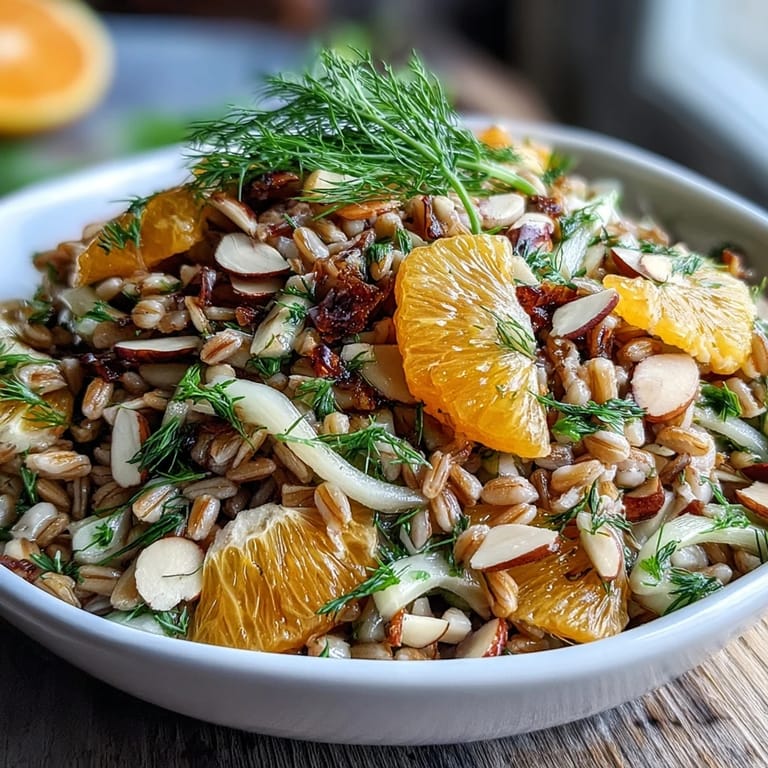
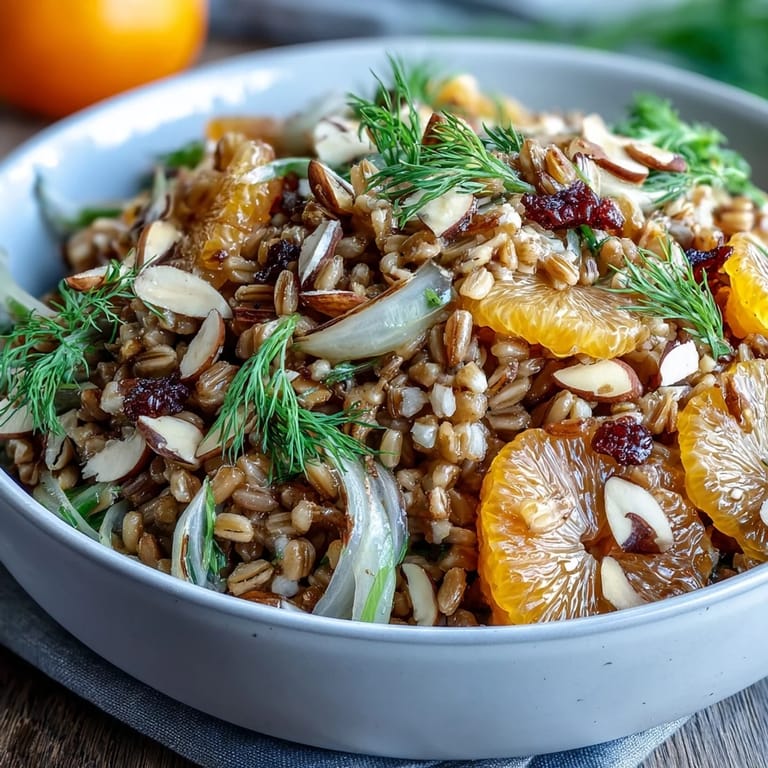
Save There's something about autumn that makes me crave salads again, which sounds backwards until you taste one with warm toasted almonds and bright citrus. My neighbor brought over a version of this farro salad last October, and I became instantly obsessed with how the nutty grain paired with crisp fennel and sweet orange segments. I must have pestered her for the recipe three times before finally admitting I'd just have to develop my own version. The first time I made it, I burned the almonds completely, but somehow that mistake led me to toast them properly the second time and understand how those few minutes of heat transform them into something almost buttery.
I served this at a potluck last spring, and someone asked for the recipe before they'd even finished their first bite. That's when I knew it was something special—not fussy, not trying too hard, just genuinely delicious. My friend who usually skips salads at gatherings came back for seconds, and we both pretended it was probably because of the almonds, though we both knew it was the whole composition working together.
Ingredients
- Whole grain farro: This is the anchor of the salad, and it's worth buying from a good source because you'll taste the difference—look for farro labeled as semi-pearled or whole grain, as it holds its texture better than quick-cooking versions.
- Water and kosher salt: Seasoning the cooking water makes all the difference; don't skip this step or your farro will taste bland.
- Fennel bulb: Slice it thin enough that it becomes almost translucent when raw, which lets it stay crisp while still being tender enough to eat without feeling like you're chewing on a log.
- Oranges: Use whatever looks brightest at the market—blood oranges add dramatic color, but regular navel oranges work beautifully too.
- Arugula or baby spinach: This adds freshness and a slight peppery note that cuts through the richness of the oil and nuts.
- Fresh parsley: Don't use the dried version here; the fresh herb brings something alive to the salad.
- Sliced almonds, toasted: Toasting them yourself in a dry skillet changes everything—store-bought toasted almonds never quite have the same intensity.
- Extra-virgin olive oil: This is where you splurge a little; a good oil makes the dressing taste like something you'd get at a restaurant.
- Orange juice, lemon juice, honey, Dijon mustard: Together these create a balanced dressing that's tangy without being acidic-sharp, sweet without being cloying.
Tired of Takeout? 🥡
Get 10 meals you can make faster than delivery arrives. Seriously.
One email. No spam. Unsubscribe anytime.
Instructions
- Cook the farro until tender and chewy:
- Rinse the farro under cold water first—this removes some of the starch and helps it cook more evenly. In a medium saucepan, combine the farro, water, and kosher salt, then bring it to a boil over high heat. Once it's boiling, reduce the heat to low, cover the pot, and let it simmer gently for 25 to 30 minutes until the grains are tender but still have a slight chew to them.
- Toast the almonds while farro cooks:
- Pour the sliced almonds into a dry skillet over medium heat and stir them frequently for 2 to 3 minutes, listening for them to start smelling deeply nutty and fragrant. You'll know they're done when they're golden brown and filling your kitchen with that toasted aroma—watch them carefully because they can go from perfect to burnt in about 30 seconds.
- Assemble the base of your salad:
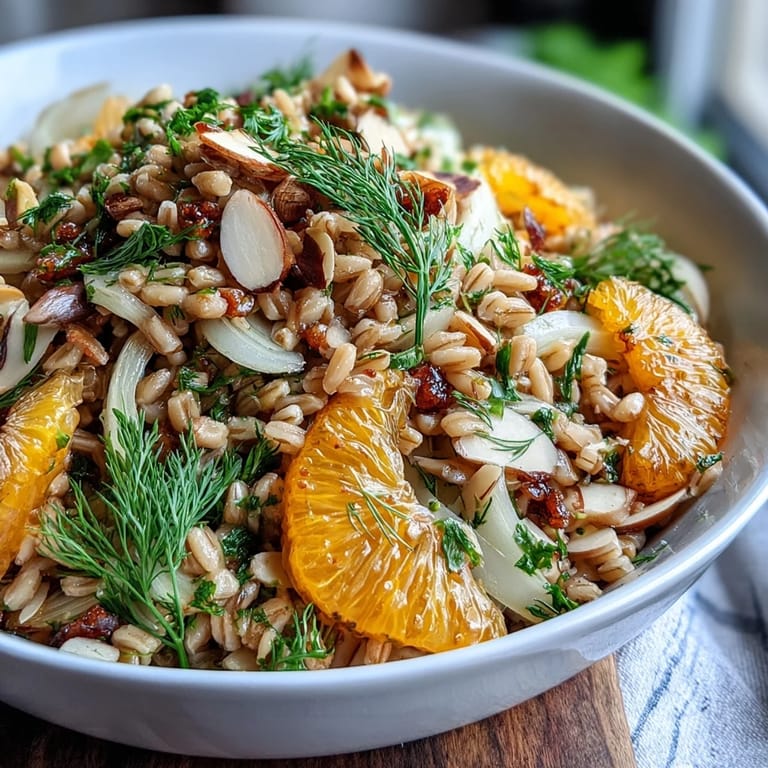
- Once the farro has cooled to room temperature, combine it in a large bowl with the thinly sliced fennel, orange segments, arugula, and fresh parsley, mixing gently so you don't crush the orange pieces.
- Whisk together the dressing:
- In a small bowl or jar, whisk the olive oil, orange juice, lemon juice, honey, Dijon mustard, salt, and pepper until the mixture becomes emulsified and creamy-looking. Taste it straight from the whisk and adjust the seasoning—if it feels too sharp, add a touch more honey; if it's too sweet, a squeeze more lemon juice will fix it.
- Bring it all together:
- Pour the dressing over the salad and toss everything gently to coat evenly, then add the toasted almonds and toss once more very lightly. Scatter the reserved fennel fronds over the top for both flavor and visual drama, then serve immediately if you like everything at room temperature, or chill it for later if you prefer a cold salad.
 Save
Save There was an evening when my partner and I sat on the back porch with bowls of this salad, and we didn't talk much—we just ate and watched the light change. That's when a dish transforms from something you made for lunch into something that becomes part of a memory, the way food sometimes does.
Why Toasting Almonds Changes Everything
I used to think toasted almonds were just a luxury garnish, something that made a dish look fancier without adding much. Then I did a side-by-side tasting of raw versus toasted in this salad, and I understood why people care so much about this small step. The toasted version brings a richness and depth that raw almonds simply can't match, and because they're the main source of textural contrast in this salad, they really do deserve the two minutes it takes to prepare them properly.
Playing With Variations
Once you understand the structure of this salad—a hearty grain, crisp vegetables, citrus, greens, and toasted nuts with a balanced vinaigrette—you'll start seeing how many directions you can take it. I've made it with pomegranate seeds and pistachios when those came into season, and another time I used grapefruit and walnuts for something more tart and robust. The beauty is that the formula stays the same, but it can taste like a completely different dish depending on what you choose to feature.
Making It Work For Your Table
This salad is genuinely vegetarian as written, but it's also forgiving enough that you can add grilled chicken, pan-seared shrimp, or crispy chickpeas if someone at your table needs more protein. I've also seen people serve it alongside roasted salmon, where the brightness of the dressing actually makes the fish taste better rather than competing with it. It travels well in containers, holds up for a day or two in the refrigerator, and never gets soggy the way some dressed salads do because the farro actually soaks up the vinaigrette gracefully.
- If you're prepping this for a picnic or packed lunch, keep the dressing separate and toss it in right before eating.
- Barley, quinoa, or even cooked wheat berries can replace the farro if that works better for your pantry or dietary preferences.
- The fennel fronds aren't just garnish—they taste like concentrated fennel flavor, so don't skip them if you can find them.
 Save
Save This is the kind of salad that made me stop thinking of salads as an obligation and start thinking of them as something I actually want to eat. It's the kind of dish that reminds you why cooking for people matters.
Q&A About the Recipe
- → How do I know when farro is properly cooked?
Farro is done when it's tender but still retains a pleasant chewy texture. Taste it after 25 minutes of simmering—it should offer some resistance when bitten, similar to al dente pasta. Drain any remaining water once it reaches your preferred texture.
- → Can I prepare this dish ahead of time?
Yes, this holds up beautifully for meal prep. Store the cooked farro and dressing separately from the fresh produce. Combine everything within an hour of serving to maintain the crispness of the fennel and arugula. The flavors actually meld better after sitting for several hours.
- → What's the best way to slice fennel for this salad?
Trim the stalks and root end, then cut the bulb in half lengthwise. Remove the tough core, then slice each half thinly crosswise for delicate ribbons. A mandoline or sharp knife works well. The fronds make a lovely garnish—reserve and chop them for a bright, anise-flavored finish.
- → Can I make this gluten-free?
Absolutely. Substitute the farro with cooked quinoa, brown rice, or millet. These grains work similarly well with the citrus vinaigrette and provide comparable texture. Adjust cooking time according to your chosen grain's package directions.
- → What proteins pair well with this grain bowl?
Grilled chicken, roasted salmon, or pan-seared shrimp complement the Mediterranean flavors beautifully. For plant-based options, add chickpeas, white beans, or crumbled feta cheese. The citrus dressing enhances both seafood and vegetarian proteins alike.
- → How do I toast almonds properly?
Place sliced almonds in a dry skillet over medium heat, stirring frequently for 2–3 minutes. Watch carefully—they go from golden to burned quickly. You'll know they're ready when they smell fragrant and turn golden brown. Remove from heat immediately and transfer to a plate to stop the cooking process.