 Save
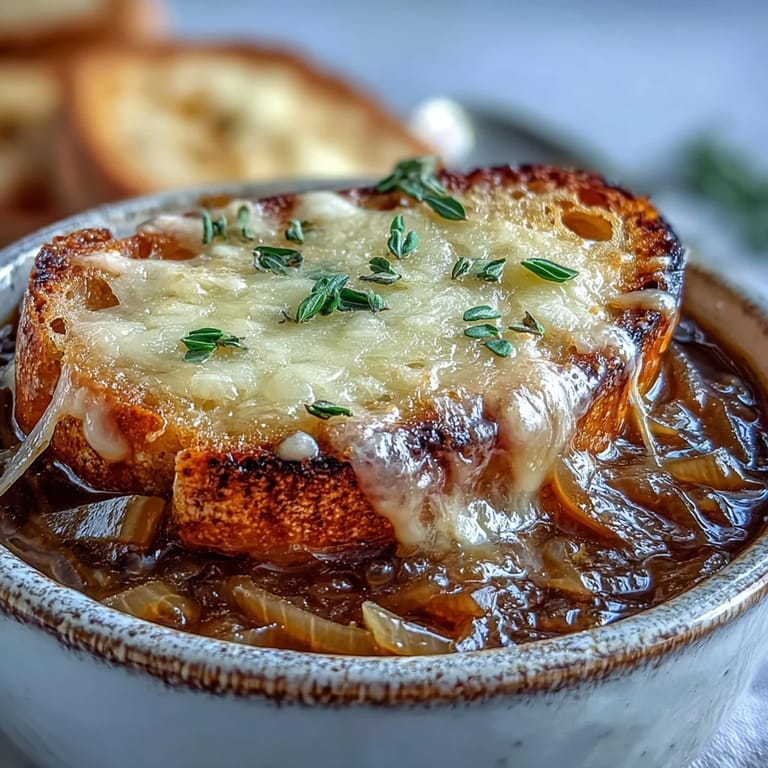
Save There's a particular kind of magic that happens in a kitchen on a cold evening when you commit to caramelizing onions for what feels like forever. I stumbled into French onion soup not through ambition but through necessity—a nearly empty pantry and the memory of a tiny bistro in Paris where a bowl of this soup transformed my entire afternoon. What started as making do with what I had became the dish I now crave when the weather turns gray and my soul needs warming from the inside out.
I made this for my sister during her first apartment's housewarming, armed with a borrowed pot and a determination to prove I could do more than order takeout. Watching her face when she tasted it—that moment when her shoulders relaxed and she closed her eyes—made me understand that food isn't really about impressing people, it's about the small gift of making someone feel cared for. We sat at her bare kitchen table with mismatched bowls and talked until the soup went cold.
Ingredients
- Yellow onions: Six large ones might seem excessive until you realize they shrink down to almost nothing—use yellow onions specifically because their natural sugars caramelize beautifully and create depth that white onions can't quite reach.
- Unsalted butter and olive oil: The combination matters; butter gives richness while olive oil keeps the heat stable, preventing burning during that long, slow caramelization.
- Beef broth: Quality here truly shows, so use the best you can find or make your own if you have time.
- Dry white wine: Optional but don't skip it if you can help it—those few minutes of simmering wine dissolve the sticky brown bits clinging to the pot bottom, adding complexity.
- Garlic, sugar, and salt: The sugar isn't about sweetness but about accelerating caramelization and deepening those savory notes.
- Fresh thyme and bay leaf: These aren't decoration; they're whispering in the background, making everything taste more intentional.
- Crusty French bread: Thick slices are essential—thin bread disintegrates into mush while thick bread holds its structure and provides textural contrast.
- Gruyère cheese: The nuttiness and the way it melts matters; don't substitute with something that won't have character.
Tired of Takeout? 🥡
Get 10 meals you can make faster than delivery arrives. Seriously.
One email. No spam. Unsubscribe anytime.
Instructions
- Melt and combine:
- In a large heavy-bottomed pot, melt the butter with the olive oil over medium heat—you want this pool of fat to feel generous and warm. The heavy bottom is non-negotiable here; it distributes heat evenly so nothing scorches while you're patient.
- Soften the onions:
- Add your sliced onions and stir occasionally for about 15 minutes, letting them wilt and turn translucent. This initial stage sets you up; don't rush it or your final soup will taste sharp instead of sweet.
- Caramelize with intention:
- Sprinkle the onions with sugar and salt, then continue cooking and stirring frequently for 30 to 40 minutes. You're watching for a deep golden-amber color; this is where the magic lives and patience becomes non-negotiable—the onions should smell almost sweet and jammy.
- Add garlic:
- Stir in minced garlic and cook for just one minute, letting the raw edge soften slightly without burning. The aroma at this moment tells you everything is on track.
- Deglaze the pot:
- Pour in the white wine if using, scraping up those caramelized bits stuck to the bottom with a wooden spoon—this is called deglazing and it's where flavor accumulates. Let it simmer for 2 to 3 minutes until slightly reduced.
- Build the broth:
- Add beef broth, thyme sprigs, bay leaf, and black pepper, then bring everything to a boil before reducing heat to low. Simmer uncovered for 30 minutes so flavors marry and deepen, then fish out and discard the thyme and bay leaf.
- Toast the bread:
- While soup simmers, preheat your broiler and arrange bread slices on a baking sheet, toasting them under the broiler until lightly golden on both sides. Set aside for assembly.
- Assemble and finish:
- Ladle hot soup into oven-safe bowls, top each with a slice of toasted bread and a generous handful of Gruyère, then place under the broiler for 2 to 3 minutes until the cheese is melted and bubbling. Serve immediately while everything is still steaming.
 Save
Save My grandmother taught me that soup is never just soup—it's an excuse to slow down and pay attention. This one especially demands that you show up, stir occasionally, breathe in the steam, and trust the process even when it feels like nothing's happening. By the time you're ladling it out, you've already given something precious to whoever's about to eat it.
The Art of Caramelization
Caramelization isn't chemistry so much as a conversation between heat, time, and patience. When onions cook low and slow, their natural sugars break down and recombine into new compounds that taste almost sweet but entirely savory. The color progression is your guide—pale gold means you're halfway there, deeper amber means you're close, and that final mahogany tone is when the magic truly arrives. I've learned to set a timer but then ignore it in favor of my eyes and nose; every pot and stove is slightly different, so trust your senses more than the clock.
Why Gruyère Matters
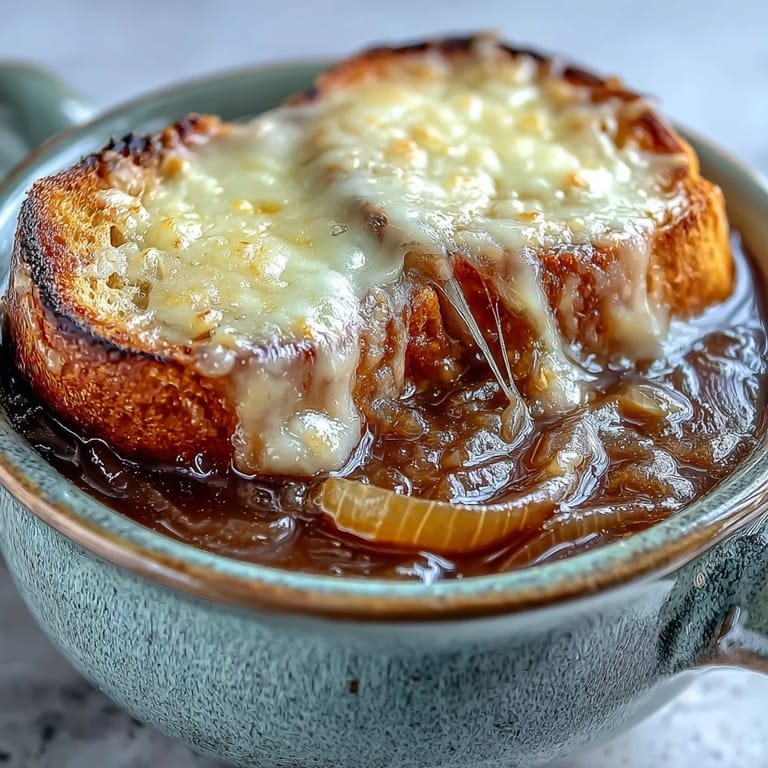
There's a reason this recipe specifically calls for Gruyère and not just any melted cheese situation. Gruyère has a subtle nuttiness and complexity that deepens rather than overwhelms the delicate balance you've built with your broth. It also melts beautifully—smooth and creamy rather than greasy or stringy—creating that ideal texture where it bubbles and browns slightly under the broiler. When you bite through the cheese into the bread and soup beneath, all three components should feel like they were designed to exist together.
Serving and Pairing Ideas
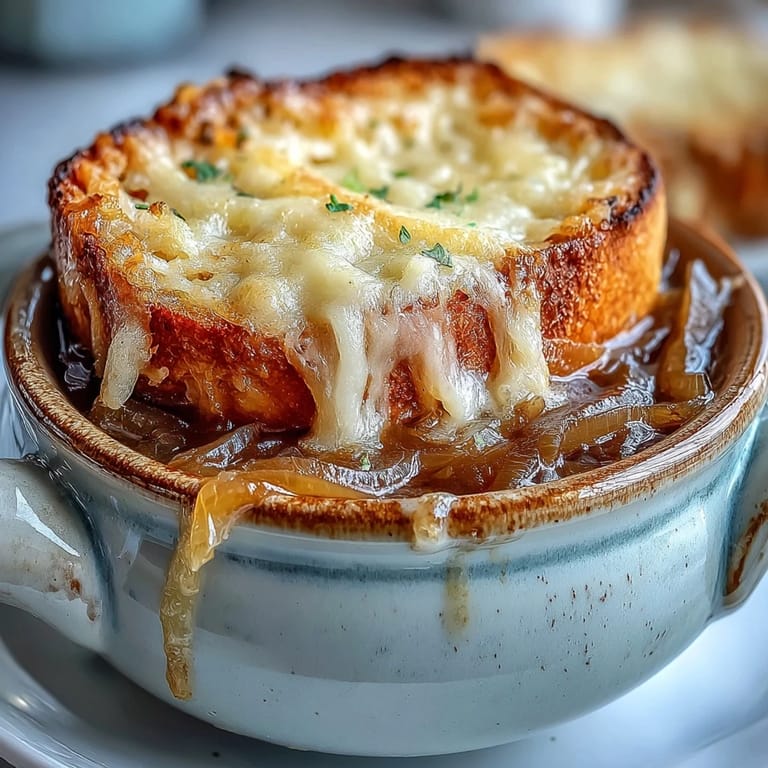
French onion soup has a quiet dignity that makes it work for nearly any occasion, whether it's a fancy dinner or a cozy weeknight. Serve it in those beautiful oven-safe bowls so the presentation matches the care you've taken, and always bring the bowls to the table steaming hot so people experience the full sensory moment. A simple green salad on the side adds brightness, or you can skip sides entirely and let this soup be the whole show.
- Pair with a dry white wine like Sauvignon Blanc or a light Pinot Noir that won't overpower the soup's delicate balance.
- If you have crusty bread scraps, brush them with garlic and use them instead of plain toasted bread for extra flavor.
- Make extra broth and freeze it in portions so you can prepare this soup again without starting from scratch on a future cold evening.
 Save
Save This soup teaches you something about cooking that extends far beyond the kitchen: that time and attention transform ordinary things into something memorable. Make it when you need that reminder.
Q&A About the Recipe
- → How long does it take to properly caramelize the onions?
Plan for 30-40 minutes of active cooking time. The onions need to cook slowly over medium heat, stirring frequently, until they turn deeply golden brown. Rushing this step will result in burnt rather than caramelized onions.
- → Can I make this soup vegetarian?
Absolutely. Simply substitute vegetable broth for the beef broth. The deeply caramelized onions provide plenty of rich, savory flavor even without meat-based stock.
- → What cheese works best if I can't find Gruyère?
Emmental or Swiss cheese are excellent alternatives that melt beautifully and provide similar nutty, complex flavors. In a pinch, a good quality mozzarella will also work for melting.
- → Do I need oven-safe bowls for this soup?
Yes, the bowls go under the broiler to melt and brown the cheese topping. Use ceramic or stoneware bowls that can withstand high heat. Avoid regular glass or plastic bowls.
- → Can I prepare this soup ahead of time?
The soup base keeps well in the refrigerator for 3-4 days and actually improves in flavor. Prepare everything except the bread and cheese topping, then reheat and add the final touches just before serving.
- → Why add sugar to the onions?
The small amount of sugar helps jumpstart the caramelization process and enhances the natural sweetness of the onions as they cook down, creating deeper, more complex flavors.