 Save
Save My first real Tom Kha Gai arrived on a rainy Bangkok evening, served in a chipped ceramic bowl by a street vendor who barely looked up from her bubbling pot. The aroma hit before the spoon touched my lips—coconut, lime, something sharp and mysterious that made my eyes water in the best way. Years later, I recreated that exact moment in my own kitchen, discovering that the magic wasn't the fancy ingredients but the patience to let aromatics whisper their secrets into the broth before anything else arrives.
I made this for my roommate on a weeknight when she came home looking completely defeated, and watching her face change after that first spoonful reminded me why I cook at all. Something about the warmth and the brightness just seemed to reset her entire mood, and honestly, it did mine too.
Ingredients
- Chicken breast: Slicing it thin means it cooks in minutes and becomes impossibly tender; I learned to partially freeze it for about 20 minutes first, which makes the knife work clean and easy.
- Chicken stock: Good stock makes all the difference here—homemade is magic, but a quality store-bought works beautifully too.
- Coconut milk: Full-fat is non-negotiable; the thin stuff leaves the soup feeling thin, but the rich version creates that luxurious mouthfeel that defines the dish.
- Lemongrass: Those pale outer layers are where the fragrance lives; crush them gently with the side of your knife to wake up the oils.
- Kaffir lime leaves: Tear them by hand so they release their citrus perfume; if you can't find them, lime zest works in a pinch but tastes different in a way that's worth noticing.
- Galangal: Similar to ginger but with a peppery, piney note that ginger can't replicate; fresh ginger is an acceptable substitute if your market doesn't stock it.
- Thai bird's eye chilies: These small ones pack serious heat, so crush them whole and let people adjust their spice level rather than making the pot too hot for everyone.
- Fish sauce: This ingredient confuses people until they taste the finished soup; it's the secret ingredient that makes everything taste more vibrant without tasting fishy itself.
- Palm sugar: It has a caramel note that brown sugar mimics reasonably well, though the flavor shifts slightly—taste and adjust as you go.
- Fresh lime juice: Bottled lime juice tastes like regret; squeeze it fresh right before serving so the brightness doesn't fade.
Tired of Takeout? 🥡
Get 10 meals you can make faster than delivery arrives. Seriously.
One email. No spam. Unsubscribe anytime.
Instructions
- Build your flavor base:
- Bring stock to a gentle boil and add all your smashed aromatics at once—lemongrass, lime leaves, galangal, chilies, garlic, and shallots. Let them simmer for 5 minutes while the broth transforms from pale yellow to golden, releasing every aromatic note into the liquid.
- Cook the chicken:
- Slice your chicken thin and slip it into the simmering broth, then immediately turn the heat down to gentle. It needs only 5 to 7 minutes—overcooked chicken makes the whole soup taste dry and sad.
- Add the coconut:
- Pour in the coconut milk slowly while stirring gently, watching it swirl through the broth in creamy ribbons. This moment is meditative if you let it be.
- Finish with vegetables:
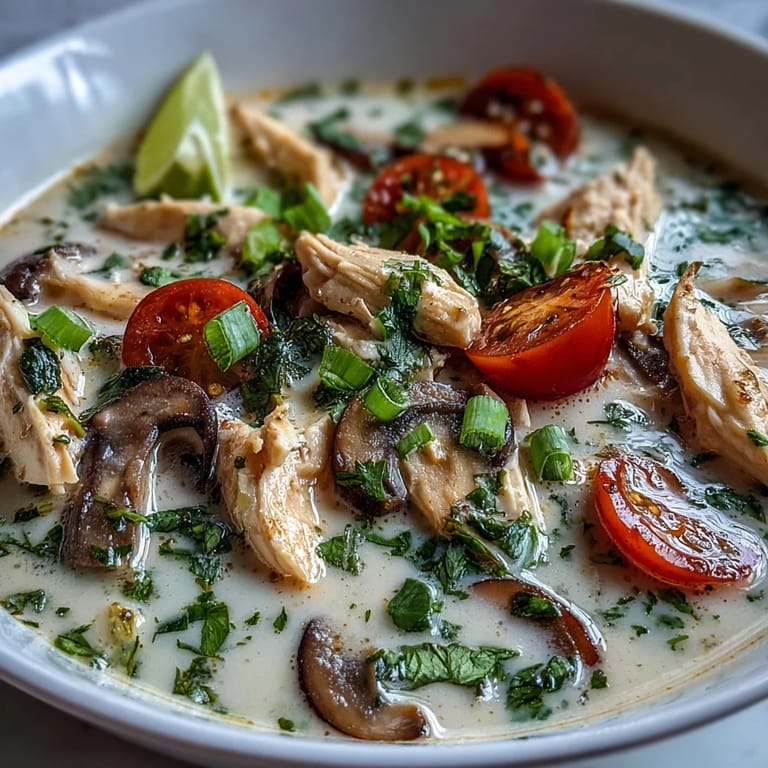
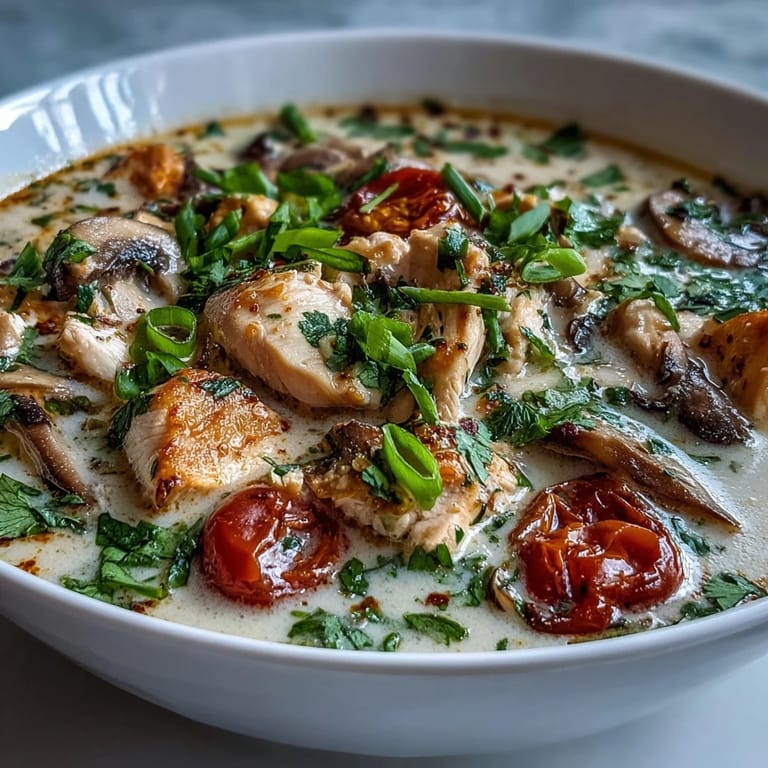
- Add mushrooms and tomatoes and let everything mingle for about 5 minutes more, keeping the heat low so nothing breaks apart or toughens.
- Season and taste:
- This is where cooking becomes personal—add fish sauce, lime juice, palm sugar, and salt, then taste. Adjust until it makes you happy; there's no single correct answer here.
- Remove solids if you prefer:
- Use a slotted spoon to fish out the larger aromatics if you like a cleaner bowl, though many people leave them in because they're too delicious to waste.
- Serve with ceremony:
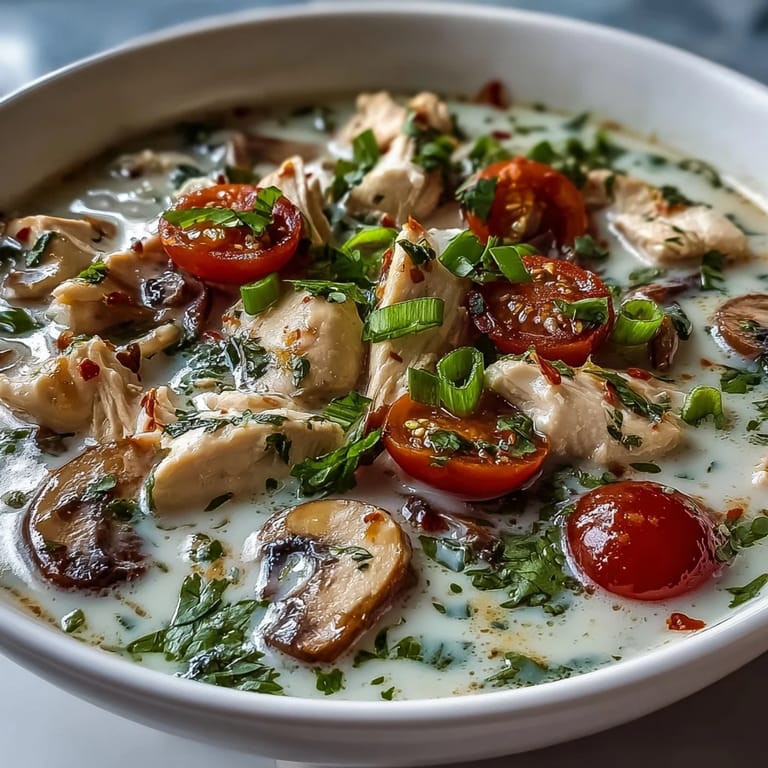
- Ladle into bowls, scatter cilantro and green onions over the top, add a lime wedge, and watch people's faces light up.
 Save
Save There's something about serving a bowl of soup that makes people slow down and actually talk to each other instead of rushing through dinner. This soup especially seems to have that effect, maybe because it requires you to pace yourself through the heat and brightness and creaminess all at once.
The Aromatic Architecture
Thai cooking is really about understanding how aromatics layer and build flavor; here, each ingredient plays a specific role. The lemongrass and galangal provide the structural flavor base, the lime leaves add brightness, the chilies contribute heat that lingers, and the garlic and shallots tie everything together into something cohesive and complete. Once you understand this architecture, you can adjust elements without destroying the whole dish.
Finding Your Balance
The five-flavor balance—spicy, salty, sour, sweet, and rich—is what makes Thai food feel alive. In Tom Kha, you're mixing heat from chilies, salt from fish sauce, sour from lime, sweetness from palm sugar, and richness from coconut. If something tastes flat, one of these five is probably missing its moment. I used to think you needed all five strong, but really it's about them dancing together rather than shouting over each other.
Variations and Substitutions
This soup is more adaptable than it first appears, which is part of why I've made it so many times. You can swap the protein, adjust the heat level, use what your market has available instead of hunting everywhere for traditional ingredients. The framework stays the same and surprisingly keeps working even when you improvise.
- For vegetarian versions, tofu works beautifully and soaks up the broth; use vegetable stock and swap fish sauce for soy sauce or tamari.
- If you can't find galangal or kaffir lime leaves, fresh ginger and lime zest create a different but genuinely delicious soup that still feels right.
- Serve with jasmine rice to turn this into a complete meal instead of just a starter course.
 Save
Save This soup has become my comfort food and my dinner party moment both, somehow managing to feel both healing and impressive at the same time. Make it once and you'll understand why.
Q&A About the Recipe
- → Can I make Tom Kha Gai ahead of time?
Yes, you can prepare this soup up to 2 days in advance. Store in an airtight container in the refrigerator. Reheat gently over low heat without boiling to prevent the coconut milk from separating. Add fresh garnishes just before serving for the best presentation and flavor.
- → What can I substitute for galangal?
Fresh ginger is the best substitute for galangal, though it has a slightly different flavor profile. Use the same amount as called for in the recipe. Galangal has a more citrusy, pine-like flavor, while ginger is spicier and more pungent, but both work wonderfully in this soup.
- → How spicy is Tom Kha Gai?
The spice level is adjustable based on your preference. The traditional version uses Thai bird's eye chilies, which are quite hot. Start with fewer chilies and add more to taste. The coconut milk helps mellow the heat, creating a balanced warmth rather than overwhelming spiciness.
- → Can I freeze Tom Kha Gai soup?
While you can freeze this soup for up to 3 months, coconut milk-based soups may separate slightly upon thawing. To freeze, cool completely and store in freezer-safe containers. Thaw overnight in the refrigerator and reheat gently, whisking to recombine if needed.
- → What type of coconut milk should I use?
Full-fat coconut milk is essential for authentic Tom Kha Gai. It provides the rich, creamy texture and flavor that defines this soup. Light coconut milk will result in a thinner, less flavorful broth. Look for quality brands without additives for the best results.
- → Where can I find kaffir lime leaves?
Kaffir lime leaves are available at Asian grocery stores, often in the frozen section. Some specialty stores carry fresh leaves. In a pinch, you can substitute with regular lime zest, though the flavor will be different. The leaves add a distinctive citrusy, floral aroma that's characteristic of Thai cuisine.