 Save
Save One weeknight, I was staring at my pantry feeling uninspired when I spotted a jar of peanut butter next to some sad-looking chicken breasts. Something clicked—what if I built an entire bowl around that nutty, savory sauce instead of letting it sit relegated to sandwich duty? The result was so good that my partner asked for it three times that week, and now it's become my go-to when I need something that feels both nourishing and indulgent without fussing for hours.
I made this for my sister the day after she mentioned she'd been eating sad desk salads for weeks. Watching her take that first bite and close her eyes in a moment of genuine contentment reminded me that food doesn't need to be complicated to feel like love on a plate.
Ingredients
- Boneless, skinless chicken breasts or thighs (500 g): Thighs stay more forgiving if you slightly overcook them, but breasts are leaner—I typically use a mix.
- Olive oil (1 tbsp): Just enough to help the spices cling and prevent sticking during roasting.
- Smoked paprika (1 tsp): This is the secret that makes plain baked chicken taste like it came from somewhere deliberate.
- Garlic powder and ground cumin (1 tsp and ½ tsp): Together they create a warm undertone that plays beautifully against the peanut sauce.
- Salt and black pepper (½ tsp and ¼ tsp): Don't skip seasoning the chicken directly—it makes all the difference.
- Brown rice or quinoa (200 g uncooked): Quinoa is quicker if you're in a hurry, but brown rice has a heartier chew that grounds the bowl.
- Water or low-sodium broth (2 cups): Broth adds subtle flavor without extra sodium if you're watching your intake.
- Carrot, bell pepper, cucumber, purple cabbage, spring onions, and greens: The crunch and color matter here—they're not just garnish, they're textural balance.
- Creamy peanut butter (80 g): Use natural peanut butter if you can; the oil separation is actually your friend for a silkier sauce.
- Soy sauce or tamari (2 tbsp): Tamari keeps things gluten-free without sacrificing that salty, umami punch.
- Rice vinegar or lime juice (1 tbsp): Lime is brighter and more forgiving if you're new to this sauce.
- Honey or maple syrup (1 tbsp): Just enough sweetness to round out the edges without making it dessert.
- Sriracha or chili sauce (1 tsp, optional): I add this almost always—it wakes everything up.
- Warm water (2–3 tbsp): The key to a pourable sauce without it becoming thin and weak.
- Roasted peanuts, cilantro or parsley, and lime wedges: These finishing touches are where the bowl goes from good to memorable.
Tired of Takeout? 🥡
Get 10 meals you can make faster than delivery arrives. Seriously.
One email. No spam. Unsubscribe anytime.
Instructions
- Heat your oven and prep the pan:
- Set your oven to 200°C (400°F) and line a baking sheet with parchment paper—this saves you from scrubbing later and helps the chicken release cleanly.
- Season the chicken generously:
- Toss your chicken pieces with olive oil and all the spices in a bowl until every surface is coated. Don't be shy here; this is where the flavor lives.
- Bake until golden and cooked through:
- Arrange chicken on your prepared sheet and bake for 20–25 minutes, watching for the edges to turn golden. The internal temperature should hit 74°C (165°F) when you check with a thermometer. Let it rest for 5 minutes before slicing—this keeps it tender.
- Start your grains while the chicken cooks:
- Rinse your rice or quinoa, then place in a saucepan with water or broth and bring to a boil. Reduce heat, cover, and simmer until tender (brown rice takes about 25 minutes, quinoa closer to 15). Fluff with a fork and set aside.
- Prepare your vegetables with care:
- Julienne or grate the carrot, slice the bell pepper and cucumber thin enough that they stay crisp, shred the cabbage, slice the spring onions, and leave your greens whole. The thinner they are, the more they soften slightly when the warm sauce meets them.
- Whisk together the peanut sauce:
- In a small bowl, whisk peanut butter with soy sauce, vinegar, honey, and sriracha until smooth. Slowly add warm water a tablespoon at a time until you reach a consistency that drizzles smoothly but isn't watery—you want it to coat a spoon.
- Build your bowls with intention:
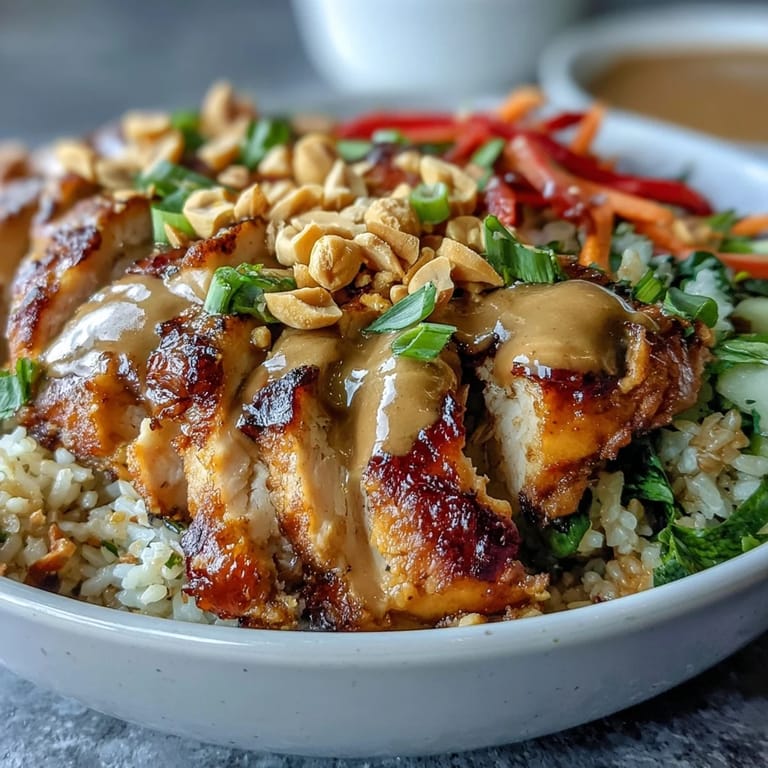
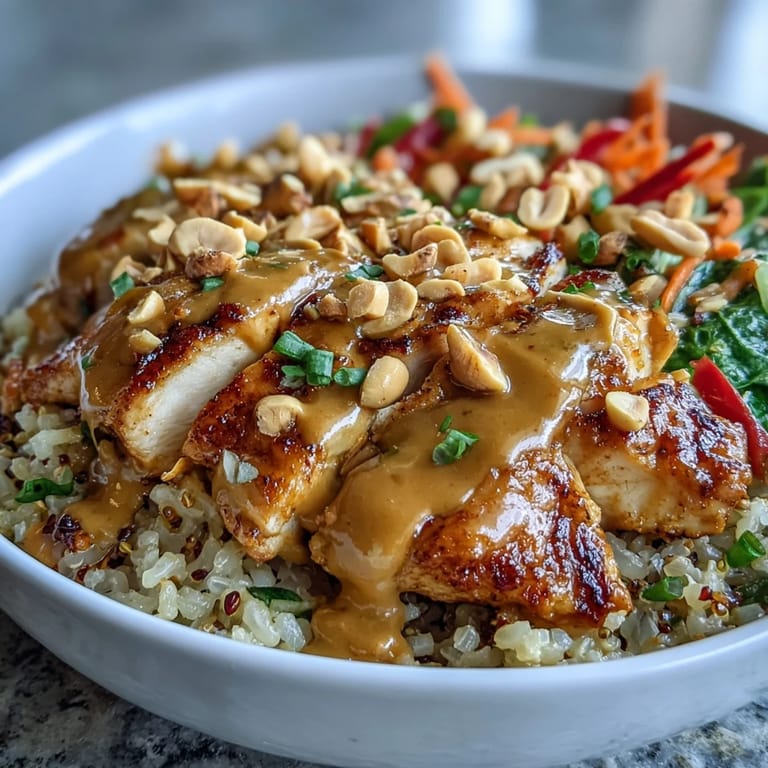
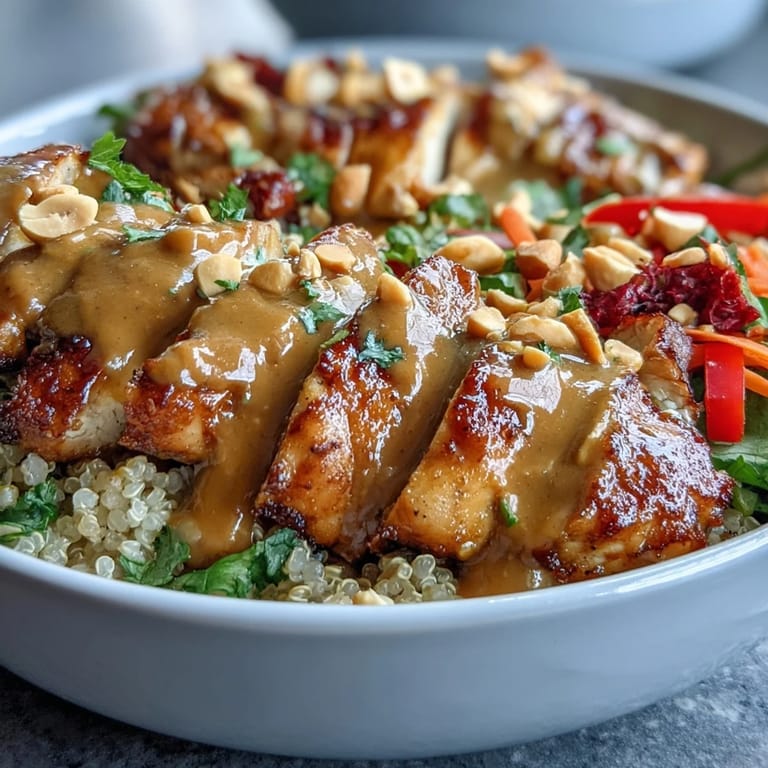
- Divide your cooked grains among four bowls, then arrange sliced chicken, vegetables, and greens on top in sections so everything stays distinct. Drizzle the peanut sauce generously over everything, letting it pool slightly in the center.
- Finish with brightness:
- Top each bowl with a handful of chopped roasted peanuts, fresh cilantro or parsley, and serve with lime wedges on the side so everyone can adjust the brightness to their taste.
 Save
Save My neighbor knocked on my door one evening drawn by the smell of that warm, nutty sauce wafting through the hallway. We ended up eating together on my fire escape, and she told me stories about traveling through Southeast Asia while we ate. That's when I realized this bowl had become more than a meal—it was an invitation to slow down and connect.
Why This Sauce Matters
The peanut sauce is the spine of this entire dish. When done right, it's neither too thick nor too thin—it should cling to the vegetables and grains without pooling heavily at the bottom of your bowl. The balance of salt from soy sauce, acid from vinegar or lime, sweetness from honey, and the natural richness of peanut butter creates something that tastes far more complex than its seven ingredients suggest. I've learned that letting people taste it on the side before mixing everything together sometimes converts skeptics who worry it might be too heavy.
Building a Better Grain Base
The grain you choose shifts the entire personality of the bowl. Brown rice feels earthy and grounding, while quinoa brings a slightly nutty flavor and a fluffier texture. I've even used farro when I wanted something chewier and heartier. The key is cooking it with broth instead of plain water whenever possible—those tiny flavor additions accumulate into something that tastes deliberately made rather than assembled from pantry staples.
Variations That Keep It Fresh
Once you've made this bowl once, you'll notice you can swap and adapt it endlessly. In summer I add sliced avocado and chilled edamame. When it's cold outside, I'll roast sweet potato cubes and toss them in while they're still warm so they catch the sauce. Vegetarians can substitute baked tofu or crispy tempeh for the chicken without losing any substance, and I've even tried it with chickpeas for an entirely plant-based version. The beauty of a bowl is that it accepts almost any honorable addition.
- For an extra protein boost, add a soft or hard-boiled egg nestled into the grains.
- If you want creaminess without dairy, a spoonful of tahini swirled into the peanut sauce does wonders.
- Don't sleep on fresh mint or basil as alternatives to cilantro—they change the entire mood of the bowl.
 Save
Save There's something deeply satisfying about a bowl that feels complete—where the protein is solid, the vegetables are vibrant, and the sauce ties everything into a coherent deliciousness. This one has saved my dinners and my peace of mind more times than I can count.
Q&A About the Recipe
- → Can I make this bowl ahead of time?
Absolutely. Cook the chicken and grains in advance, store them separately in airtight containers, and assemble when ready. The peanut sauce keeps well in the refrigerator for up to a week—just add a splash of water to thin before serving.
- → What's the best way to reheat leftovers?
Warm the chicken and grains gently in the microwave or on the stovetop. Keep fresh vegetables cold and add them after reheating to maintain crunch. Drizzle with fresh peanut sauce just before eating.
- → Can I use other proteins besides chicken?
Yes. Baked tofu, tempeh, or shrimp work beautifully. For plant-based options, press and marinate tofu in the same spice blend, then bake until golden. Shrimp only needs 8–10 minutes of cooking time.
- → How can I adjust the peanut sauce consistency?
Start with 2 tablespoons of warm water and whisk thoroughly. If the sauce is too thick, add more water one tablespoon at a time until it reaches your desired pourable consistency.
- → What grains work best in this bowl?
Brown rice and quinoa are excellent choices. For quicker options, try pre-cooked rice pouches or cauliflower rice for a low-carb twist. Farro and bulgur also pair wonderfully with the peanut flavors.
- → Is this suitable for meal prep?
Perfect for meal prep. Portion cooked chicken, grains, and chopped vegetables into separate containers. Store peanut sauce in a small jar. Everything stays fresh for 4–5 days in the refrigerator.