 Save
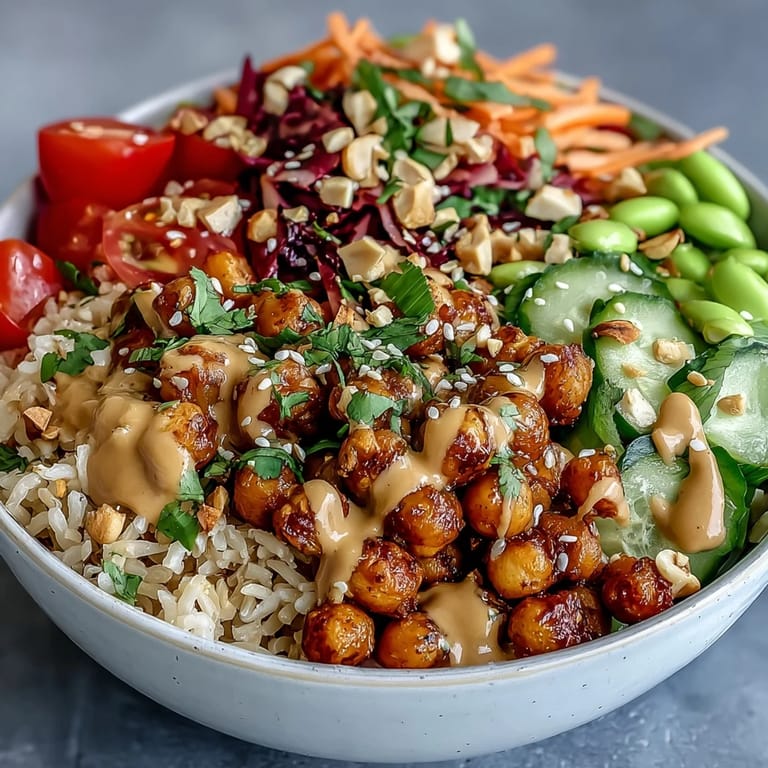
Save Last Tuesday, I was scrolling through my phone during lunch when a coworker mentioned she'd been eating the same sad desk salad for weeks. Something clicked—I wanted to show her that vegetarian bowls could actually be exciting, so I started building this one in my head. The magic isn't in any single ingredient; it's how crispy chickpeas, cool vegetables, and that ridiculous peanut sauce come together to make something that tastes both comforting and alive.
My sister brought her new boyfriend over for dinner, and I was nervous about impressing him without resorting to complicated cooking. I made four of these bowls and set them on the table without much fanfare, but watching him go back for thirds while we talked told me everything. Sometimes the best meals are the ones that let people enjoy themselves without fussing.
Ingredients
- Chickpeas (2 cans, drained and rinsed): They're the protein backbone here, so don't skip the rinsing step—it removes the starch and helps them crisp up beautifully in the oven.
- Olive oil, smoked paprika, ground cumin, garlic powder, salt, and black pepper: This simple seasoning blend builds flavor without overwhelming the chickpeas; the smoked paprika is what makes them taste restaurant-quality.
- Brown rice or quinoa (2 cups cooked): Brown rice gives you earthiness and texture; quinoa adds a little more protein if that matters to your crew.
- Red cabbage (1 cup shredded): Its crisp, slightly peppery bite cuts through the richness of the sauce and adds that satisfying crunch.
- Carrots (1 cup julienned), cucumber (1 cup sliced), and cherry tomatoes (1 cup halved): Fresh vegetables keep the bowl bright and balanced; julienne the carrots thin so they soften slightly when dressed.
- Edamame (1/2 cup cooked): Extra plant-based protein that adds a little sweetness and pop to each bite.
- Fresh cilantro (1/4 cup chopped): Don't skip this unless you're one of those people who hates it; it brings everything together with a subtle herbaceous finish.
- Creamy peanut butter (1/3 cup): Use natural peanut butter if possible, but make sure it's smooth enough to whisk without lumps.
- Soy sauce (2 tbsp) or tamari for gluten-free: This adds umami depth that makes the sauce crave-worthy.
- Maple syrup or honey (1 tbsp): Just enough sweetness to balance the savory and spicy notes without making it taste like dessert.
- Rice vinegar (1 tbsp): Brings acidity and helps keep the sauce light and drizzle-able.
- Sriracha or chili sauce (1 tsp, optional): This is your heat control—adjust to your comfort level or skip it entirely.
- Garlic (1 clove, finely minced): Fresh garlic punches up the sauce in a way that powder can't compete with.
- Warm water (2–4 tbsp): Start with two tablespoons and add more gradually until the sauce reaches the consistency of thick cream.
- Roasted peanuts (2 tbsp, roughly chopped) and sesame seeds (1 tbsp optional): Final toppings that add texture and a little extra nuttiness.
- Lime wedges: Squeeze them over the bowl just before eating to brighten everything up.
Tired of Takeout? 🥡
Get 10 meals you can make faster than delivery arrives. Seriously.
One email. No spam. Unsubscribe anytime.
Instructions
- Heat your oven and prep:
- Turn the oven to 425°F and line a baking sheet with parchment paper so cleanup is easier later. This high heat is what transforms those chickpeas from soft to gloriously crispy.
- Season and roast the chickpeas:
- In a bowl, toss your drained chickpeas with olive oil, smoked paprika, cumin, garlic powder, salt, and pepper until every one is coated. Spread them out on the baking sheet in a single layer and roast for 20–25 minutes, shaking the pan halfway through—you'll know they're done when they're golden and make a little hollow sound when you tap one.
- Whisk together the peanut sauce:
- While the chickpeas are roasting, combine the peanut butter, soy sauce, maple syrup, rice vinegar, sriracha if using, minced garlic, and two tablespoons of warm water in a bowl. Whisk until smooth and pourable, adding more water one tablespoon at a time if it feels too thick; it should drape beautifully over the bowl without being runny.
- Cook your base grains:
- If you haven't already, cook your brown rice or quinoa according to package directions and set it aside to cool slightly. This is the time to also do any last-minute veggie prepping.
- Arrange your vegetables:
- Get your shredded cabbage, julienned carrots, sliced cucumber, halved cherry tomatoes, edamame, and cilantro ready in small bowls or on a cutting board. Doing this assembly-line style makes the actual bowl-building feel effortless.
- Build your bowls:
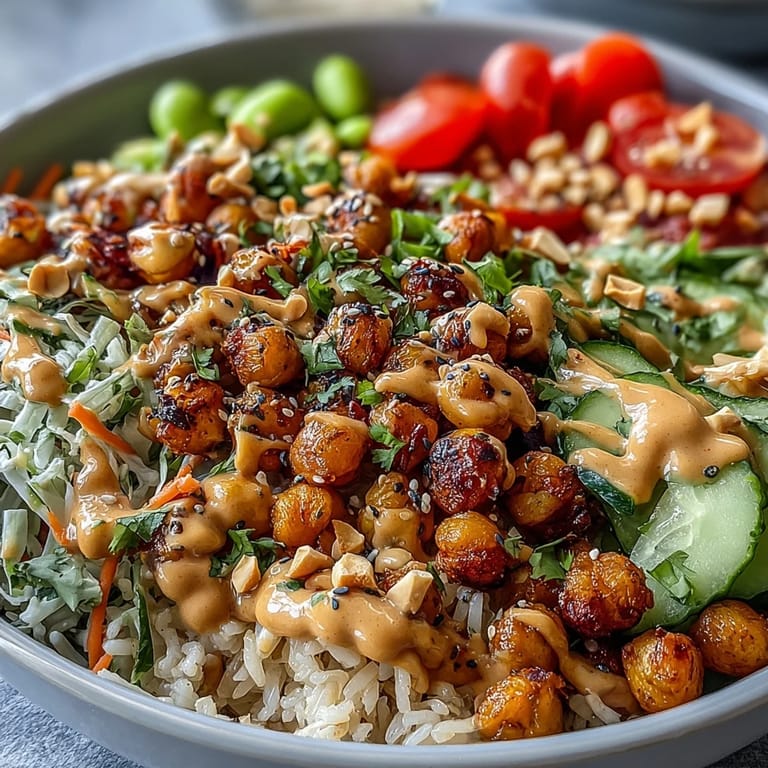
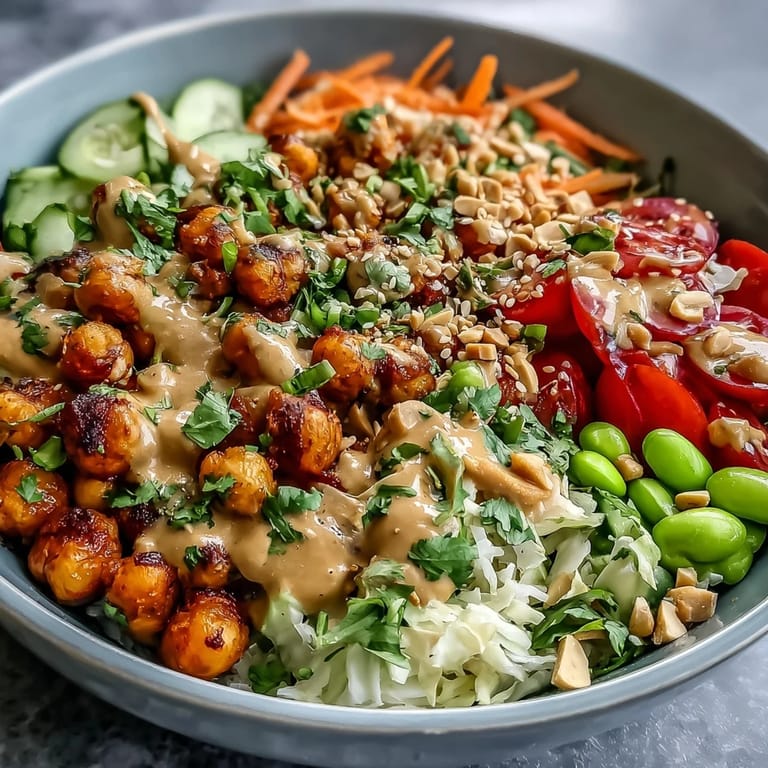
- Divide the cooked grain among four bowls, then arrange the roasted chickpeas, cabbage, carrots, cucumber, tomatoes, edamame, and cilantro on top. Don't overthink the arrangement—it's going to get drizzled with sauce anyway.
- Finish and serve:
- Drizzle each bowl generously with peanut sauce, sprinkle with chopped roasted peanuts and sesame seeds if you're using them, and set a lime wedge on the side. Squeeze the lime over the bowl as you eat to brighten everything up.
 Save
Save There's this moment right when you drizzle the warm peanut sauce over the cool vegetables and crispy chickpeas, and the smell hits you—nutty, slightly savory, with that whisper of garlic. That's when you know this bowl is about to be exactly what you needed, whether that's fuel for an afternoon or comfort after a rough day.
Customizing Your Bowl
The beauty of this recipe is that it's endlessly flexible depending on what you have or what you're craving. I've swapped out the brown rice for cauliflower rice when I wanted something lighter, added baby spinach or kale when I wanted more greens, and even thrown in roasted sweet potato chunks when I had them hanging around. The chickpeas and peanut sauce are the core, but everything else is fair game for riffing.
The Peanut Sauce Story
That peanut sauce deserves its own moment. It's thick and creamy but somehow still drizzle-able, and the balance between salty soy, sweet maple, tart vinegar, and earthy peanut butter is what makes people ask for the recipe. I learned the hard way that cold peanut butter doesn't whisk smoothly, so always make sure yours has been sitting out a bit and that your water is genuinely warm.
Make-Ahead and Storage Tips
This bowl is perfect for meal prep because the components keep well separately in the fridge for up to four days. I usually roast the chickpeas and make the sauce on Sunday, chop vegetables on Wednesday morning, and assemble bowls as needed. Keep the peanut sauce in a separate container and don't dress the greens until you're ready to eat, so nothing gets soggy or sad sitting around.
- Store roasted chickpeas in an airtight container and reheat them in a dry skillet for a minute if they lose their crispness.
- The peanut sauce thickens as it cools, so bring it back to drizzle-able consistency with a splash of warm water when you're ready to eat.
- Assemble bowls in layers with grains on bottom to keep everything from shifting around.
 Save
Save This bowl became a regular in my rotation because it feels special enough for company but simple enough for a Tuesday night when I'm too tired to think. That's the kind of recipe that actually gets made.
Q&A About the Recipe
- → Can I make this bowl ahead of time?
Absolutely. The roasted chickpeas stay crisp for 2-3 days when stored separately. Keep vegetables chopped and sauce in separate containers. Assemble just before serving for best texture, or pack components for meal prep lunches throughout the week.
- → What can I use instead of peanut butter?
Almond butter, cashew butter, or sunflower seed butter work well as substitutes. Tahini creates a different flavor profile but still delivers creaminess. For nut-free versions, use sunflower seed butter and omit peanut toppings.
- → How do I get the chickpeas extra crispy?
Thoroughly dry chickpeas after rinsing with a clean towel. Make sure they're in a single layer on the baking sheet without overcrowding. Roast at 425°F and don't skip shaking the pan halfway through. Let them cool slightly on the pan after roasting.
- → Can I use canned vegetables instead of fresh?
Fresh vegetables provide the best crunch, but you can substitute with what's available. Frozen corn or thawed edamame work well. For cucumbers and cabbage, fresh is recommended as canned versions lack the necessary texture.
- → Is the sauce spicy?
The sauce has mild heat from sriracha, which you can adjust or omit entirely. Without sriracha, the sauce is creamy and tangy rather than spicy. Add more chili sauce if you prefer extra kick, or substitute with red pepper flakes.
- → What other grains work well?
Brown rice and quinoa are excellent choices. Try farro for a nutty texture, bulgur for quicker cooking, or cauliflower rice for a low-carb option. Even soba noodles or jasmine rice pair beautifully with the peanut flavors.