 Save
Save There's something about the sound of a steak hitting hot oil that takes me straight back to my grandmother's kitchen on a Sunday afternoon. She'd stand at that old cast iron skillet with the confidence of someone who'd made chicken fried steak a thousand times, the kitchen filling with that rich, savory smell that made everyone drift toward the dining table whether they meant to or not. She taught me that this dish isn't about fancy technique or expensive cuts—it's about respecting simple ingredients and the alchemy that happens when you bread something golden and fry it right. I've made it countless times since, and every batch still feels a little bit like her kitchen.
I'll never forget the first time I made this for my partner without a recipe, just trusting what I'd watched my grandmother do. I got cocky with the oil temperature, burned the first batch, and stood there genuinely embarrassed until they tasted the second round and announced it was the best thing I'd ever made. We ended up eating dinner at ten o'clock, laughing about my dramatic moment of panic, and I realized the real victory wasn't a perfect steak—it was creating that kind of moment together.
Ingredients
- Beef cube steaks (4, about 150–180 g each): These are already tenderized, which is the whole secret—they cook fast and stay tender, not tough.
- All-purpose flour (1 cup/125 g): Use it as your base breading layer; it bonds everything together.
- Eggs (2 large) and whole milk (1 cup/240 ml): Mix these into an egg wash that helps the breadcrumbs stick like glue.
- Breadcrumbs (1 cup/60 g): They're what gives you that golden, crispy crust that shatters when you bite down.
- Garlic powder, onion powder, paprika (1 tsp each): These three are the holy trinity—don't skip them or your seasoning will taste flat.
- Cayenne pepper (1/2 tsp, optional): A whisper of heat wakes everything up without overwhelming the dish.
- Salt and black pepper (1 tsp salt, 1/2 tsp pepper): Season aggressively; these steaks need confidence.
- Vegetable oil: You need enough to fry—about a centimeter deep in your skillet—and it must be hot.
- Pan drippings or unsalted butter (3 tbsp), flour (3 tbsp), whole milk (2 cups/480 ml): These three things become silky, peppery gravy that ties everything together.
- Fresh parsley (2 tbsp, optional): A garnish that adds color and freshness against all that richness.
Tired of Takeout? 🥡
Get 10 meals you can make faster than delivery arrives. Seriously.
One email. No spam. Unsubscribe anytime.
Instructions
- Dry your steaks completely:
- Pat them down with paper towels until they feel dry to the touch—moisture is the enemy of crispiness. This small step makes the difference between breading that sticks and breading that falls off.
- Set up your breading station:
- Three shallow bowls in a row: flour mixed with your spices in the first, beaten eggs with a splash of milk in the second, breadcrumbs in the third. Having this ready before you start means you won't second-guess yourself midway.
- Bread each steak with intention:
- Coat in flour, then egg, then breadcrumbs, pressing gently as you go so the coating actually adheres. Take your time here—this is what creates the texture you're after.
- Heat your oil properly:
- Let it get hot enough that a breadcrumb dropped in sizzles immediately, but not so hot that it smokes. You're looking for medium-high heat and about a centimeter of oil covering your skillet.
- Fry with patience:
- Three to four minutes per side until the coating is golden brown and the edges look crispy. Work in batches if needed—crowding the pan drops the temperature and ruins everything.
- Make a gravy that sings:
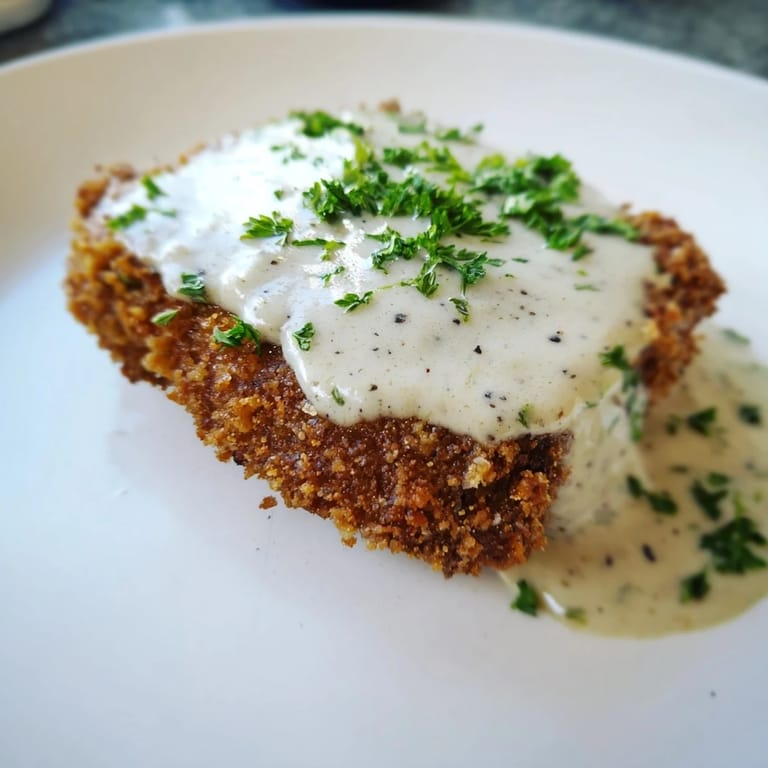
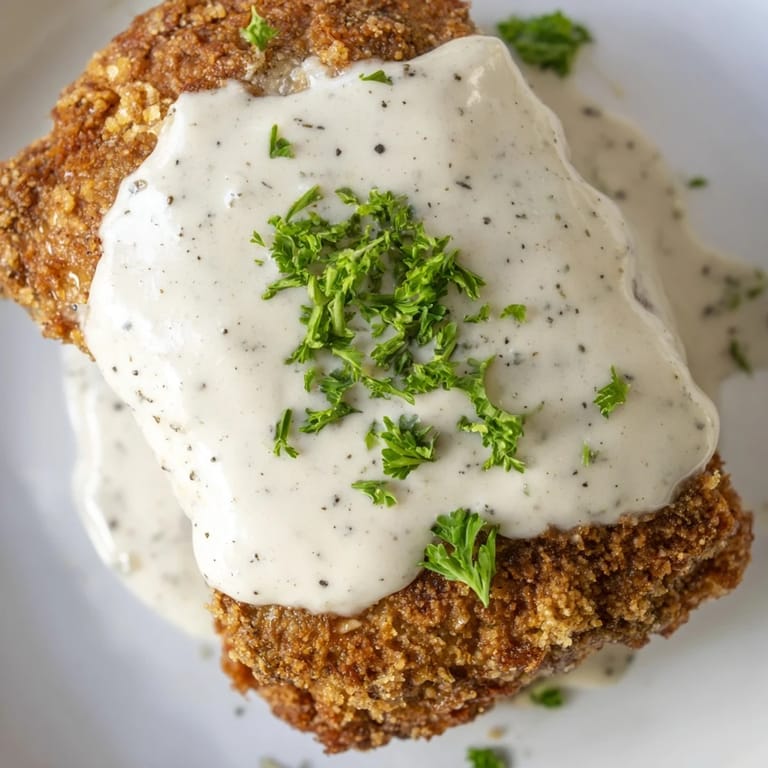
- Pour off all but 3 tablespoons of oil, add flour, and whisk for a full minute to create a roux—don't rush this. Gradually pour in milk while whisking, scraping up all those browned bits stuck to the pan, and keep cooking until it's thick and silky.
- Season and serve:
- Taste your gravy and adjust salt and pepper boldly. A good gravy should taste like it has something to say.
 Save
Save Years ago, I brought this dish to a potluck thinking it was humble comfort food, nothing fancy. A colleague who grew up in rural Texas took one bite and got genuinely emotional—she said it tasted exactly like her mother's version, and suddenly we weren't just eating, we were sharing a memory. That's when I understood that some foods transcend the plate; they're about belonging to a place and a people.
The Golden Breading Secret
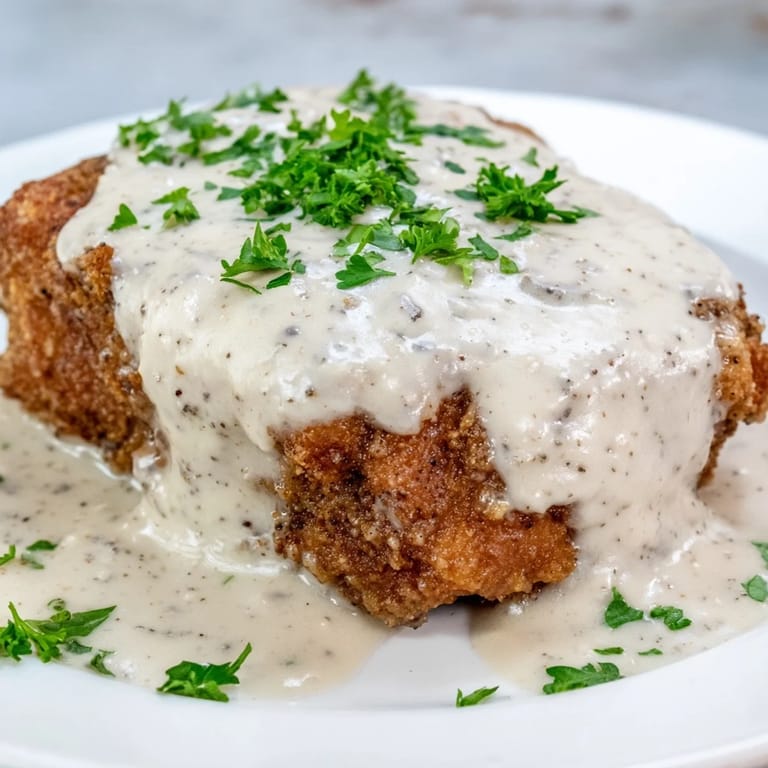
The difference between good chicken fried steak and unforgettable chicken fried steak is all in how you treat the coating. Most people either skimp on the breadcrumbs or use them interchangeably with flour, but they're completely different creatures. Breadcrumbs brown faster, crispen more dramatically, and create that shattered-glass texture when you bite down. The flour base holds everything together and bonds with the egg wash, while the breadcrumbs are what makes people stop talking mid-sentence to focus on eating.
Building Your Gravy Like You Mean It
White gravy seems simple until you realize that most people make it too thin or too lumpy, and suddenly it's less of a complement and more of an afterthought. The secret is patience with your roux—don't just toss flour into hot oil and expect magic. Toast that flour for a full minute, let it smell nutty and warm, and only then start adding milk in a slow stream while whisking constantly. The browned bits stuck to the pan aren't crud, they're flavor—scrape them up and incorporate them.
Serving and Pairing Like a Southern Kitchen
This meal demands sides that don't compete but rather embrace the richness. Creamy mashed potatoes are the traditional partner, letting you soak up every drop of gravy, but crisp green beans roasted with garlic are a lovely counterpoint if you want something fresher on the plate. I've also done buttered corn and never regretted it.
- Make extra gravy because people always want more, and second servings are where the real joy happens.
- If your oil temperature fluctuates, your steaks will cook unevenly—keep the heat steady and monitor it carefully.
- Serve everything hot, straight from the pan, because this is the kind of food that loses its magic if it cools down.
 Save
Save This is the kind of dish that reminds you why people cook—not to show off, but to gather around something warm and feed the people they love. Make it, serve it, and watch what happens.
Q&A About the Recipe
- → What cut of meat is ideal for this dish?
Cube steaks are preferred as they are tenderized, making them perfect for breading and frying to a crisp texture.
- → How do I achieve a crispy coating on the steak?
Coat the steak in seasoned flour, dip in egg and milk mixture, then press breadcrumbs firmly before frying in hot oil until golden brown.
- → What ingredients are used for the creamy gravy?
The gravy is made from pan drippings or butter, flour to thicken, whole milk, and seasoning with salt and pepper.
- → Can this dish be made gluten-free?
Yes, use gluten-free flour and breadcrumbs as substitutes to avoid gluten while keeping the same texture.
- → What are good side dishes to serve alongside?
Classic sides include mashed potatoes or steamed green beans, which complement the rich flavors.