 Save
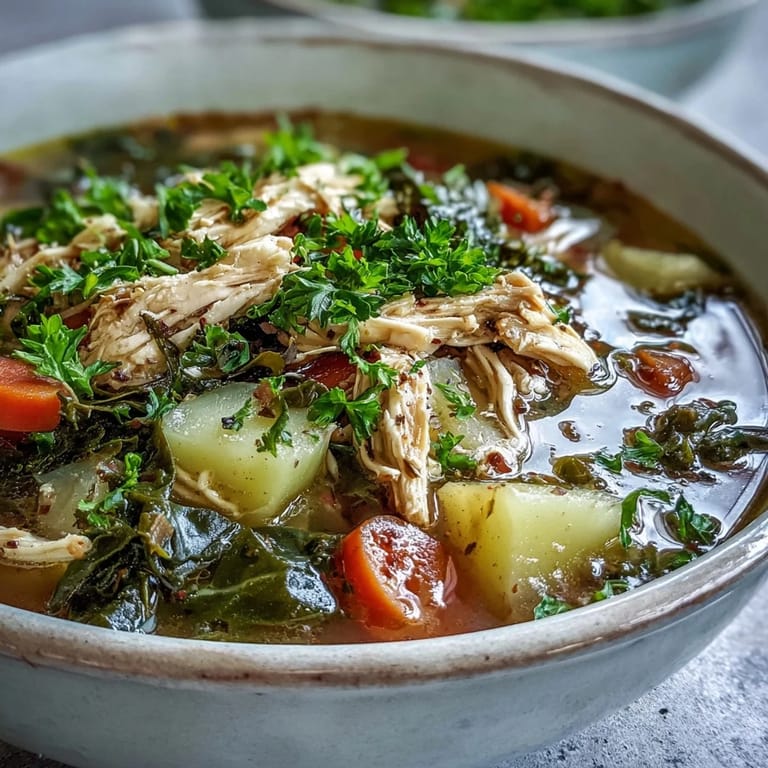
Save There's something about a pot of collard greens and chicken soup that turns a regular Tuesday into something worth savoring. My neighbor brought over a steaming bowl one winter afternoon when I was buried under deadlines, and I realized within the first spoonful that good food can reset your whole day. The tender greens, the soft potatoes, the way the broth carries just enough warmth and flavor—it felt like someone genuinely cared. Now I make this soup whenever I want that same feeling, whether I'm cooking for myself or feeding someone who needs it.
I made this for my kids on a rainy Saturday, and they actually asked for seconds without being prompted. That never happens. My youngest wanted to help tear the chicken apart, and suddenly we were laughing about how it shredded into these perfect silky strands. Watching them blow on their spoon to cool it down, getting broth on their chins—that's when I knew this recipe belonged in regular rotation.
Ingredients
- Boneless, skinless chicken breasts (2, about 400 g): Look for ones that are roughly the same thickness so they cook evenly; if one is much thicker, gently pound it with the side of your knife handle first.
- Collard greens (1 large bunch, about 300 g): Strip the leaves from the tough center stem by holding the stem with one hand and sliding your knife along it with the other—this small step makes a huge difference in texture.
- Yukon Gold potatoes (2 medium, peeled and diced): These hold their shape better than starchy varieties and add a subtle sweetness that balances the earthiness of the greens.
- Carrots (2, peeled and sliced): Slice them at a slight angle so they cook faster and look a little more intentional in the bowl.
- Celery stalks (2, diced): This is your quiet flavor builder; don't skip it even if it feels like a background player.
- Onion (1 medium, diced): Use a yellow onion for sweetness, and take your time dicing it so the pieces are roughly the same size.
- Garlic cloves (3, minced): Fresh garlic makes a difference you'll taste; mince it just before you need it so the oils are still alive.
- Low-sodium chicken broth (1.5 liters or 6 cups): Taste your broth before using it—some brands are saltier than others, which changes how much salt you'll add at the end.
- Bay leaf (1): This adds a subtle depth that's hard to identify but definitely missed if you leave it out.
- Dried thyme (1 teaspoon): Thyme and chicken are a classic pairing for good reason; it brings everything together.
- Smoked paprika (1 teaspoon): This isn't just color; it adds a whisper of smokiness that makes people ask what your secret is.
- Black pepper (½ teaspoon): Crack it fresh if you have a grinder, but pre-ground works just fine.
- Salt (1 teaspoon, or to taste): You're tasting as you go, so don't be shy about adjusting this at the end.
- Olive oil (2 tablespoons): This is your first step's foundation; don't use anything too fancy or too cheap.
- Lemon juice (½ lemon): This brightens everything right at the finish and keeps the soup from tasting heavy.
- Fresh parsley, chopped, for garnish (optional): A small handful sprinkled on top adds color and a fresh note that matters more than you'd think.
Tired of Takeout? 🥡
Get 10 meals you can make faster than delivery arrives. Seriously.
One email. No spam. Unsubscribe anytime.
Instructions
- Heat your oil and start the foundation:
- Pour the olive oil into your large pot over medium heat and let it warm until it shimmers slightly. Add your diced onion, carrots, and celery all at once, stirring occasionally as they soften—you're looking for that moment about 5 or 6 minutes in when they smell sweet and the onion starts to turn translucent.
- Build the aromatics:
- Push everything to the side of the pot and add your minced garlic to the empty space, letting it cook for just about a minute while you stir it in. You'll know it's ready when the kitchen suddenly smells incredible and the garlic starts to turn golden at the edges.
- Add everything and start simmering:
- Add your whole chicken breasts, diced potatoes, bay leaf, thyme, smoked paprika, salt, and pepper, then pour in all the broth. Stir gently so everything settles, then bring the whole pot to a boil over medium-high heat—this usually takes 5 to 7 minutes and you'll see the broth start to bubble around the edges first.
- Let it cook gently:
- Once it's boiling, reduce the heat to a gentle simmer, cover the pot, and let it go for about 20 minutes. The chicken will cook through, the potatoes will become fork-tender, and the broth will taste a little richer just from simmering.
- Shred the chicken:
- Carefully remove the cooked chicken breasts with a slotted spoon and place them on a cutting board. Using two forks, pull the meat apart into shreds—it should fall apart almost without effort if it's cooked through.
- Add the collard greens:
- Return your shredded chicken to the pot and add all your chopped collard greens, stirring them in so they're submerged. Let them simmer uncovered for 10 to 12 minutes until they're tender but still bright green—they'll shrink down quite a bit, so don't be surprised.
- Finish with brightness:
- Stir in your lemon juice and taste the soup carefully. Add more salt or pepper if it needs it, keeping in mind that the flavors will settle a bit once it cools slightly.
- Serve with intention:
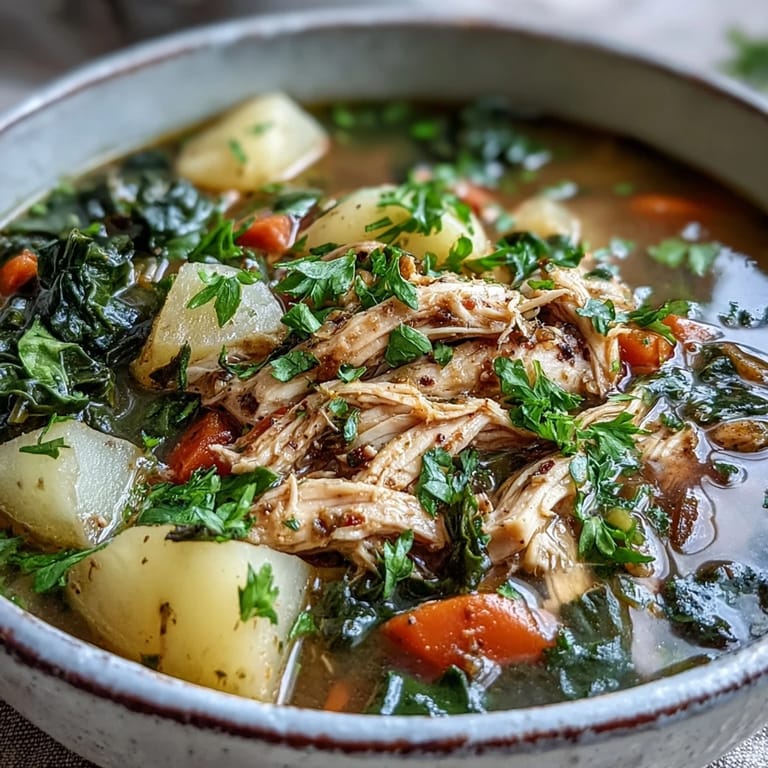
- Ladle the soup into bowls, making sure each one gets some broth, vegetables, and chicken. A small handful of fresh parsley on top adds color and a fresh note that makes people slow down and actually taste what they're eating.
 Save
Save A friend came over who was going through something heavy, and we sat at my kitchen counter with big bowls of this soup between us. We didn't need to say much; the warmth of it seemed to do some of the talking. That's when I understood that a really good soup is just another way of saying I'm thinking of you.
Why This Soup Feels Different
Most soups try to be fancy or complicated, but this one doesn't apologize for being simple. The collard greens bring an earthy depth that you don't find in more delicate greens, and they hold up beautifully without turning into something unrecognizable. The smoked paprika is the quiet hero here—it adds a warmth that makes people ask what your secret ingredient is, even though it's right there in the ingredient list.
The Story of Getting It Right
My first attempt at this soup, I undercooked the potatoes because I rushed, and the second time I added the greens too early and they lost their color. The third time I learned to trust the timing and to taste as I went, and suddenly it all clicked into place. Now I know that good cooking isn't about being precious or perfect—it's about paying attention and being willing to adjust.
Making It Your Own
This soup is forgiving enough to let you play around with it. I've added a Parmesan rind while it simmered and let it work its magic for the full cooking time—remove it before serving, but the umami it adds is remarkable. Sometimes I use kale or Swiss chard instead of collard greens depending on what I have or what I'm craving. The vegetarian version with white beans instead of chicken is just as satisfying, and the cooking time stays exactly the same.
- Save the vegetable scraps from prep and freeze them to make homemade broth next time.
- This soup gets even better after a day in the refrigerator when all the flavors have had time to get to know each other.
- If you're serving this to a crowd, keep the garnish separate and let people add their own parsley so it stays fresh and bright.
 Save
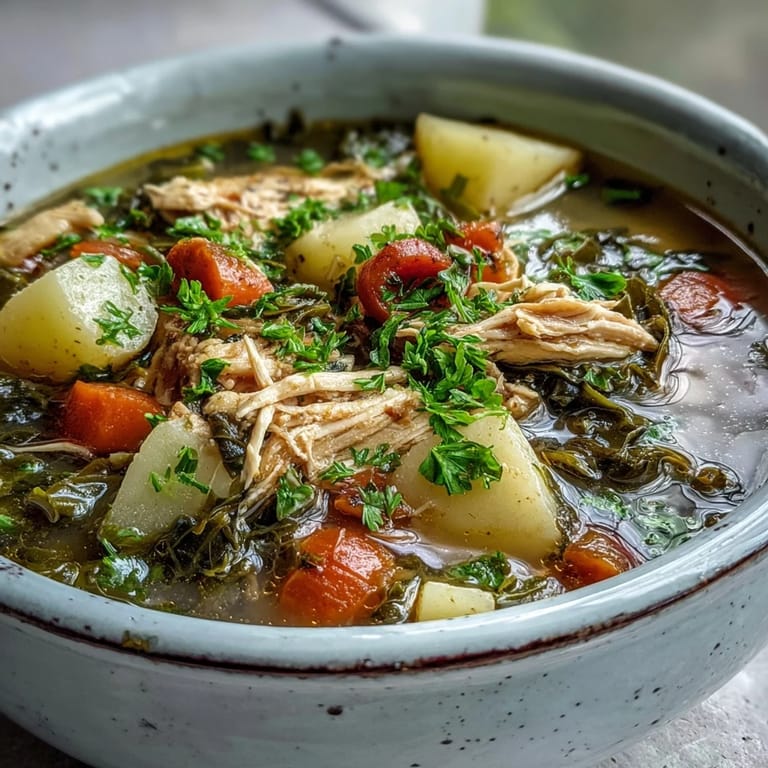
Save This soup reminds me that the best food is often the kind that asks nothing of you except to show up and eat it. Make it for yourself, make it for someone else, make it because you need something warm and honest on your table.
Q&A About the Recipe
- → Can I use other greens instead of collard greens?
Yes, kale or Swiss chard work beautifully as substitutes. Keep in mind cooking times may vary slightly—kale typically cooks faster while chard may need less time than hearty collards.
- → How do I store leftovers?
Cool completely and refrigerate in airtight containers for up to 4 days. The flavors continue developing, making it even better the next day. Freeze for up to 3 months if desired.
- → Can I make this vegetarian?
Absolutely. Simply omit the chicken and use vegetable broth instead. Add a can of drained white beans or chickpeas during the last 15 minutes to maintain protein content.
- → What makes collard greens special in soups?
Collard greens hold their texture well during long simmering, becoming tender without turning mushy. Their slightly bitter earthiness balances beautifully with the sweet carrots and creamy potatoes.
- → Can I use rotisserie chicken to save time?
Certainly. Shred about 3 cups of rotisserie chicken and add it during the last 10 minutes of cooking just to heat through. Skip step 4 where raw chicken simmers in the broth.
- → What's the purpose of lemon juice at the end?
Fresh lemon juice cuts through the richness and brightens all the flavors. It helps balance the earthy greens and highlights the aromatic vegetables and spices.