 Save
Save There's something about the sound of chicken tenders hitting hot oil that takes me straight back to my cousin's kitchen, where we'd stand on tiptoes watching them turn golden through the glass lid. She had this whole system down—the buttermilk soak, the three-bowl breading station, the timer she'd set without even looking. Years later, I finally understood why hers tasted so much better than anything I'd tried at restaurants. It wasn't fancy cooking; it was just patience and knowing exactly when to flip them.
I made these once for my nephew's soccer team after a Saturday morning game, and I've never seen kids move so fast toward a kitchen counter. The barbecue sauce got everywhere—his shirt, the grass, someone's socks—but nobody cared because they were too busy asking if there were more. That's when I realized these tenders aren't just food; they're the kind of dish that brings people together without any fuss.
Ingredients
- Chicken breast fillets (500 g): The key is cutting them into even strips so they cook uniformly; I learned the hard way that thick chunks stay raw while thin edges burn.
- Buttermilk (120 ml): This isn't optional—it tenderizes the chicken and creates a subtle tang that plain milk or yogurt just can't replicate, no matter how long you soak.
- Salt and black pepper: Use them in both the marinade and breading; layering seasoning is what separates homemade from forgettable.
- Garlic powder and paprika (marinade): The garlic dissolves into the buttermilk and seasons from within, while paprika adds warmth and color that hints at what's coming.
- All-purpose flour and smoked paprika (breading): The smoked paprika in the flour gives you flavor even before frying, and the flour creates that essential crispy shell.
- Panko breadcrumbs: Panko stays crispier longer than regular breadcrumbs because of its larger, airier structure—regular breadcrumbs will give you dense, heavy tenders.
- Eggs: They're the glue that holds everything together; make sure they're well-beaten so the breadcrumb coating adheres evenly.
- Vegetable oil: Use oil with a high smoke point like canola or peanut oil; olive oil will burn and taste bitter at frying temperature.
Tired of Takeout? 🥡
Get 10 meals you can make faster than delivery arrives. Seriously.
One email. No spam. Unsubscribe anytime.
Instructions
- Marinate the chicken:
- Whisk together the buttermilk with salt, pepper, garlic powder, and paprika until the spices break up and distribute evenly. Submerge the chicken strips completely—they should be fully covered so the marinade works its tenderizing magic uniformly. If you have time, let them sit in the fridge; cold marinating lets the flavors sink deeper.
- Set up your breading stations:
- Arrange three shallow bowls in a line: flour mixed with salt and smoked paprika first, beaten eggs second, panko breadcrumbs third. This assembly-line approach keeps your hands from getting completely coated in raw egg and flour, which is something I discovered after making a mess of my first attempt.
- Coat each tender:
- Lift a chicken strip from the marinade, let the excess drip off for a few seconds, then coat it thoroughly in the flour mixture. Shake off any excess, dip it into the egg so it's fully wetted, then immediately press it into the panko breadcrumbs, making sure they stick to all sides. Don't rush this step or skip the egg layer; it's the glue that keeps your crispy coating from falling off during frying.
- Heat your oil:
- Pour oil into your deep skillet to about 5 cm depth and clip a thermometer to the side so you can watch it climb to 175°C (350°F). This temperature is crucial—too cool and they'll be greasy; too hot and they'll burn before cooking through inside.
- Fry in batches:
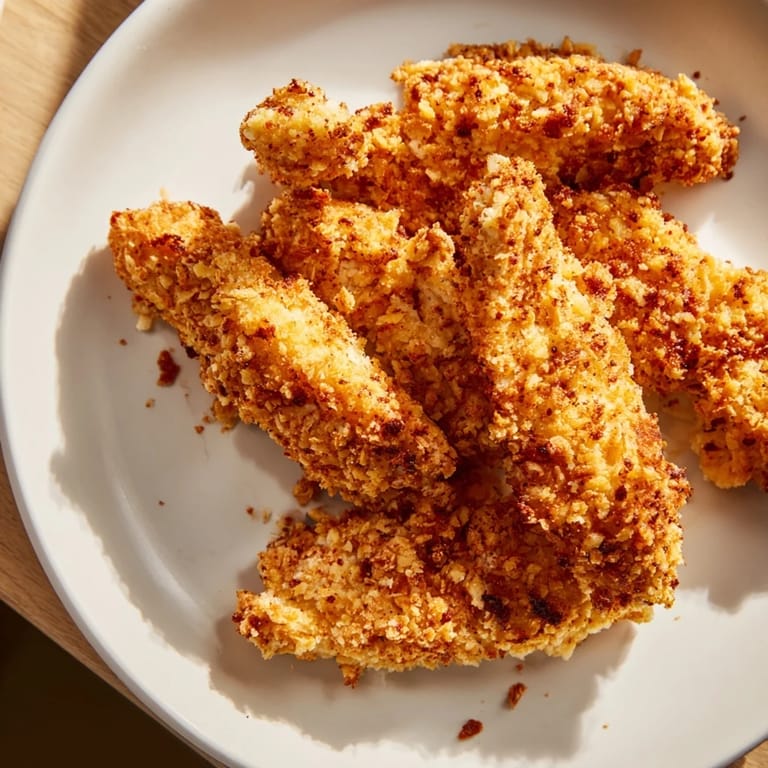
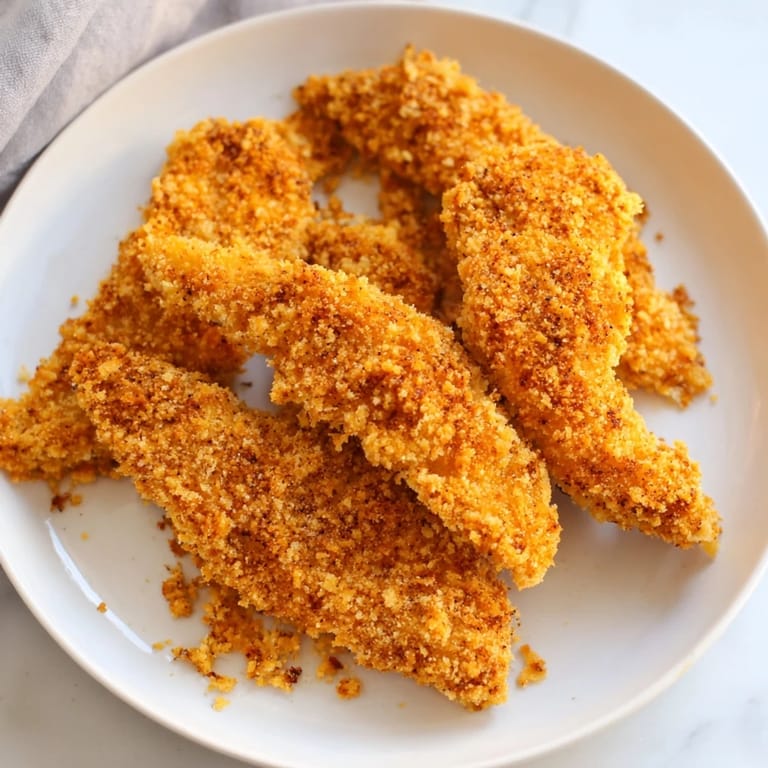
- Don't overcrowd the pan; give each tender space to float and crisp. Fry for 3 to 4 minutes per side until they're deep golden brown and you can see the coating is set and crunchy. If you're unsure about doneness, cut into the thickest piece and check that it's white all the way through with no pink.
- Drain and rest:
- Transfer them to a wire rack or paper towels immediately after frying so they stay crispy instead of steaming themselves soggy on a closed plate.
 Save
Save The moment I'll never forget is when my dad, who never compliments my cooking, quietly asked if he could have another one while we were still eating the first batch. No big speech, no dramatic moment—just that simple request that meant everything. Sometimes the best meals aren't the complicated ones; they're the ones that remind people why home cooking matters.
When Fried Isn't the Only Way
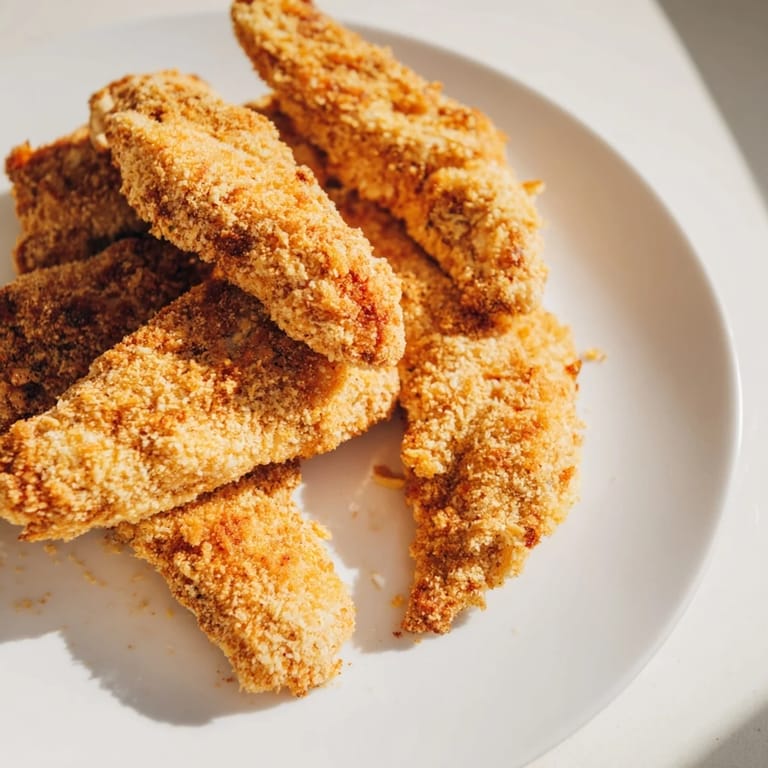
If deep frying makes you nervous or you're looking for a lighter option, the oven-baked version works beautifully with the exact same preparation. Lay your breaded strips on a baking sheet, give them a light spray of oil (this is important; it helps them brown instead of just drying out), and bake at 220°C (425°F) for 18 to 20 minutes, flipping halfway through. They won't have quite the same shattering crispness as the fried version, but they'll still be golden, crunchy, and honestly delicious without the oil splatter.
What to Serve Alongside
I've learned that tenders are a vehicle for whatever you're craving that day. Crispy fries and a simple green salad make them feel like a restaurant meal; tangy coleslaw cuts through the richness and adds a cooling crunch; even just sliced tomato and lettuce on a soft roll turns them into something sandwiched and satisfying. Pick whatever makes you happy—there's no wrong answer here.
Flavor Variations and Personal Touches
Once you've mastered the basic formula, you can start playing. A pinch of cayenne pepper in the marinade brings heat that sneaks up on you; dried herbs like oregano or thyme in the breading add an almost Mediterranean flavor that works surprisingly well with barbecue sauce. I've even tried a tiny bit of hot sauce whisked into the egg wash, which gave an underlying kick without making them actually spicy. The foundation is strong enough to support whatever you want to experiment with.
- Add a teaspoon of garlic powder and a half teaspoon of cayenne to the marinade if you want a more assertive, spiced version.
- Mix fresh grated Parmesan into the panko breadcrumbs for a savory, umami-rich coating that's addictively good.
- Whisk a tablespoon of hot sauce into your beaten eggs for a subtle background heat that builds with each bite.
 Save
Save There's genuine comfort in making something this simple that turns out so well every single time. Whether they're devoured by a hungry family or served to skeptical guests who end up going back for thirds, these tenders have a way of making people happy.
Q&A About the Recipe
- → What is the best way to marinate the chicken strips?
Marinate chicken strips in buttermilk combined with salt, pepper, garlic powder, and paprika for at least 30 minutes to enhance tenderness and flavor.
- → How do I achieve a crispy coating?
Use a three-step breading process: dredge chicken in seasoned flour, dip in beaten eggs, then coat with panko breadcrumbs before frying for a crisp texture.
- → What oil temperature is ideal for frying?
Maintain oil at 175°C (350°F) to ensure even cooking and a golden crust without absorbing excess oil.
- → Can these strips be baked instead of fried?
Yes, bake the breaded strips at 220°C (425°F) for 18–20 minutes, flipping halfway to achieve a crispy exterior with less oil.
- → What sauces pair well with these chicken strips?
Barbecue and honey-mustard sauces complement the crispy chicken, adding smoky and sweet tangy flavors.
- → Are there any tips for extra flavor?
Adding cayenne pepper or dried herbs to the marinade or breading introduces a spicy or aromatic kick to the strips.