 Save
Save There's something about the way butter and cream transform into liquid gold over gentle heat that still catches me off guard. Years ago, at a tiny trattoria outside Rome, I watched a chef make fettuccine Alfredo with what seemed like just three ingredients and infinite patience, and I realized that sometimes the simplest dishes demand the most respect. This version brings that quiet elegance to your own kitchen—no fancy techniques, just the confidence that comes from understanding how butter loves cream, and how Parmesan cheese becomes part of something bigger than itself.
I made this for my partner on a Tuesday night when we both came home tired, and somehow that simple bowl of creamy pasta felt like the most thoughtful thing I could offer. The kitchen filled with this warm, buttery smell, and by the time we sat down, the whole day's frustration had melted into something better. That's when I understood—Alfredo isn't fancy; it's honest.
Ingredients
- Fettuccine: 400 grams of dried pasta is the foundation; it has just enough surface area to hold the sauce without disappearing into it.
- Unsalted butter: 60 grams (4 tablespoons) of good, real butter is non-negotiable—this is where half your flavor lives.
- Heavy cream: 250 milliliters (1 cup) creates the silky texture, but it also needs the butter and cheese to shine.
- Freshly grated Parmesan cheese: 120 grams (1 1/4 cups) should always be grated fresh; pre-grated cheese has anti-caking agents that make the sauce grainy instead of smooth.
- Garlic clove: Just one, minced finely and optional, but a whisper of it against melting butter is a small revelation.
- Salt and freshly ground black pepper: Season as you go, never at the end—this sauce reveals itself in layers.
- Pinch of nutmeg: A mere shadow of it, optional but worth the gesture; it softens everything and makes people wonder what makes this taste so right.
- Chicken breasts: Two boneless, skinless breasts add protein without overwhelming the delicate sauce.
- Olive oil: 2 tablespoons for sautéing the chicken until it's golden and rested.
- Fresh parsley: Chopped bright green at the end, purely for color and a hint of freshness against all that richness.
- Extra Parmesan: A final shower of it, because why stop when you've already committed to the flavor.
Tired of Takeout? 🥡
Get 10 meals you can make faster than delivery arrives. Seriously.
One email. No spam. Unsubscribe anytime.
Instructions
- Start the pasta:
- Bring a large pot of salted water to a rolling boil—it should taste like the sea, not the ocean. Add the fettuccine and cook until al dente, which means it still has a tiny bit of resistance when you bite it; that resistance is what keeps the whole dish from turning to mush.
- Save the starchy water:
- Before you drain, reserve a full cup of pasta water in a small bowl—this liquid gold will become your secret weapon for controlling the sauce's consistency later.
- Cook the chicken (if using):
- Season both sides generously with salt and pepper, then heat olive oil in a large skillet over medium-high heat until it shimmers. Sauté the chicken for 6 to 7 minutes per side, until the surface is golden and the inside is opaque; don't move it around constantly, let it get a proper crust.
- Rest the chicken:
- Once cooked through, transfer it to a clean plate and let it sit for 5 minutes—this lets the juices redistribute, so when you slice it, it stays tender instead of drying out on the plate.
- Build the sauce gently:
- In a large pan over medium-low heat, melt the butter slowly, watching it transform from solid to glossy to fragrant. If using garlic, add it now and let it sizzle for just 30 seconds until your kitchen smells like you mean business.
- Add the cream:
- Pour in the heavy cream and let it come to a gentle simmer, stirring constantly for 2 to 3 minutes—you're not trying to boil it, just bring it to warm, lazy bubbles at the edges.
- Introduce the cheese:
- Reduce the heat to low and begin whisking in the Parmesan cheese slowly, a handful at a time, letting each addition fully melt before adding the next. This patience is everything; rush it and you'll end up with grainy, broken sauce instead of the silk you're after.
- Season thoughtfully:
- Taste it now and adjust the salt, pepper, and if you're using it, add that pinch of nutmeg—it should taste rich but not heavy, with a subtle warmth underneath.
- Bring it together:
- Add the drained fettuccine to the sauce and toss gently with tongs until every strand is coated and glistening. If the sauce seems too thick, add reserved pasta water a splash at a time, stirring between additions, until it coats the pasta but isn't swimming in liquid.
- Finish and plate:
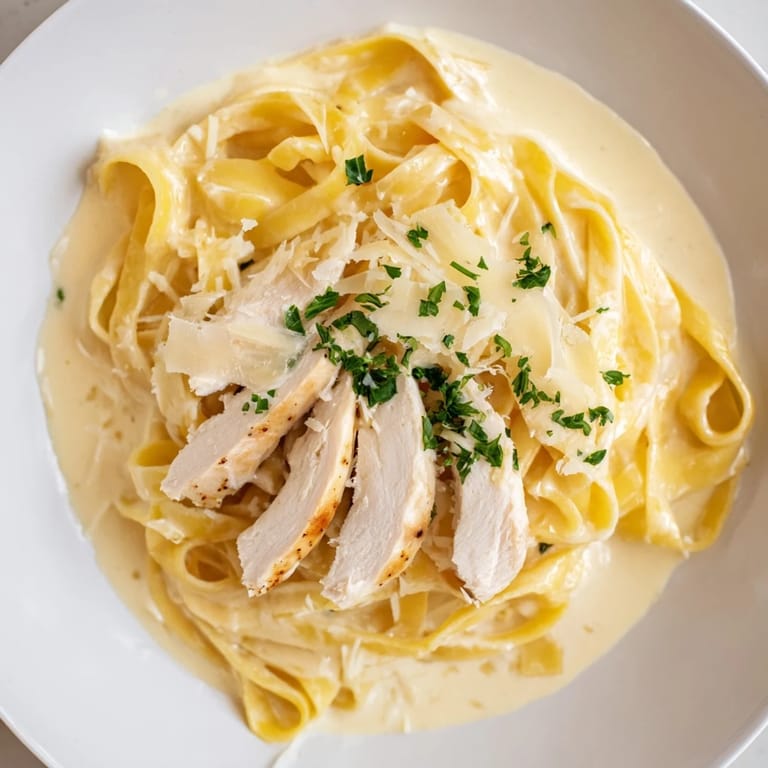
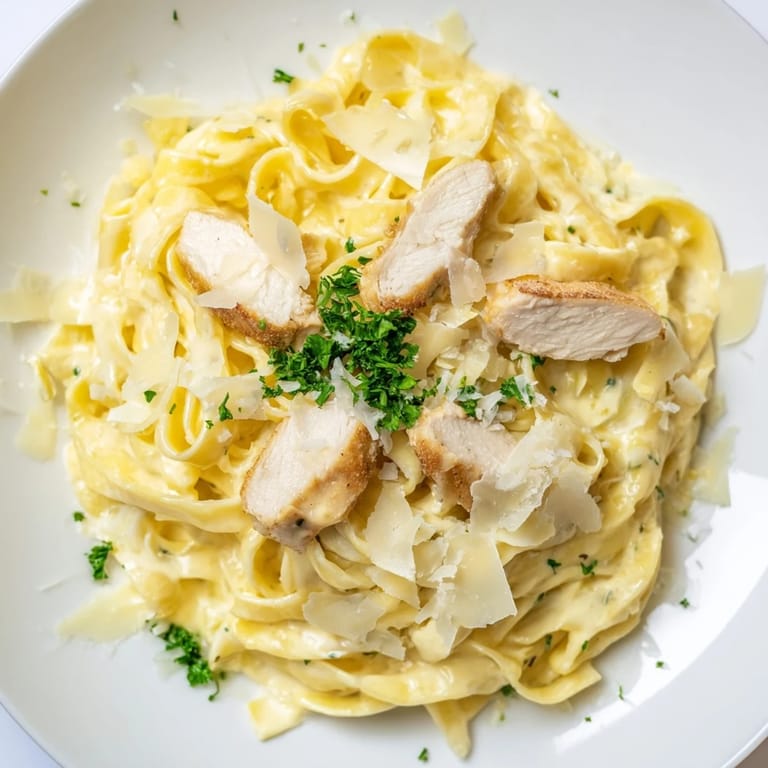
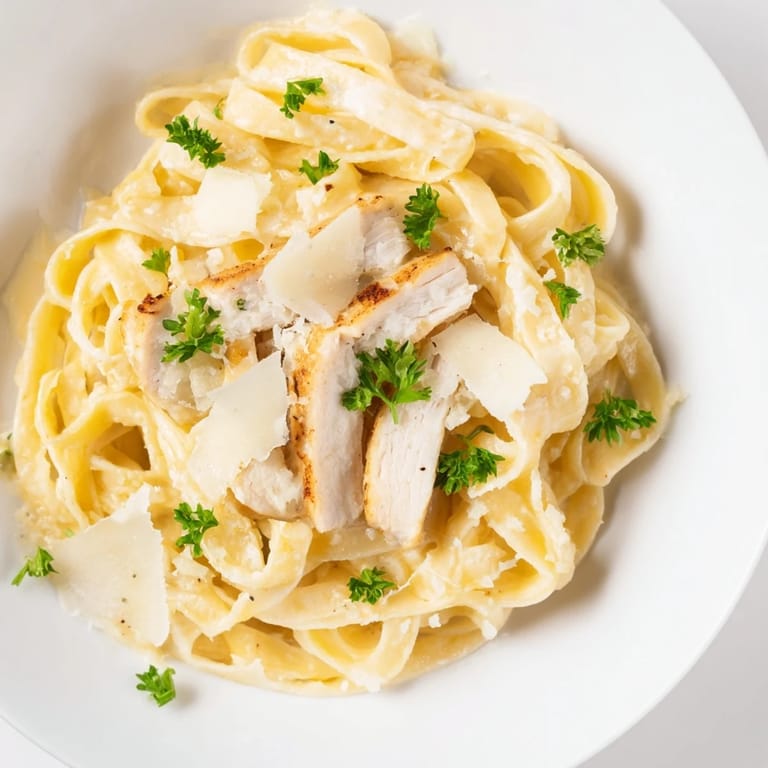
- Divide the fettuccine among bowls or plates, top with sliced chicken if you made it, then scatter fresh parsley and a final generous handful of Parmesan over each serving. Serve immediately while it's still warm and creamy.
 Save
Save I once served this to a friend who said she couldn't eat heavy cream because it always upset her stomach, and halfway through the bowl she just looked at me puzzled and said, 'I feel fine,' and we both laughed because good technique and good ingredients somehow matter more than our assumptions. That's what this dish teaches you if you pay attention.
The Magic of Simplicity
Alfredo belongs to that rare category of dishes where you can't hide behind complexity or technique—there's nowhere to go but toward better ingredients and cleaner execution. A third-rate ingredient will ruin it; butter made from good milk, cream that hasn't been over-processed, cheese from an actual cow and not a factory—these things matter in a way they might not matter in a busier, more complicated dish. There's something calming about cooking something where everything is visible, where every choice shows up on the plate.
Variations That Work
The beauty of a strong foundation is that it welcomes gentle additions without toppling. Sautéed mushrooms stirred in at the last second add earthiness, tender peas bring a hint of sweetness and pop, pan-seared shrimp transforms it into something almost elegant, and crispy pancetta scattered on top adds a necessary contrast. But these are conversations with the base recipe, not arguments against it—the cream and Parmesan stay constant while everything else dances around them.
Pairing and Serving
This dish doesn't ask for much, but it rewards thoughtfulness in the glass and on the side plate. A crisp white wine like Pinot Grigio or even a light Sauvignon Blanc cuts through the richness and reminds your palate that you're still alive. A simple green salad with lemon vinaigrette on the side isn't extra—it's essential, a bright counterpoint that makes the next bite of creamy pasta taste even better.
- Serve immediately while the sauce is still warm and flowing, not separated and broken.
- A grind of black pepper and shower of fresh parsley at the table makes each person feel like the dish was just made for them.
- Leftover Alfredo can be reheated gently with a splash of cream or pasta water, but honestly, it's best fresh.
 Save
Save There's a moment after you plate fettuccine Alfredo when you watch someone take that first bite and their shoulders relax slightly, and you know you've done something right. That's the whole reason to cook this dish.
Q&A About the Recipe
- → How can I make the sauce creamier?
Slowly whisk in the heavy cream and Parmesan cheese over low heat to achieve a smooth, creamy texture without curdling.
- → Can I include chicken with the dish?
Yes, sauté skinless boneless chicken breasts until golden and cooked through, then slice thinly and add on top for extra protein.
- → What pasta water usage improves the sauce?
Adding reserved pasta water bit by bit helps loosen the sauce and allows it to coat the pasta evenly for a silky finish.
- → Are there optional ingredients to enhance flavor?
Finely minced garlic, a pinch of nutmeg, or substituting with pecorino Romano cheese can add depth and complexity to the sauce.
- → What garnishes complement this dish?
Freshly chopped parsley and extra grated Parmesan cheese provide a fresh and savory finishing touch.
- → Can this dish be adapted for a gluten-free diet?
Yes, using gluten-free pasta will keep the dish accessible for gluten-sensitive eaters without compromising flavor.