 Save
Save I learned to make this soup on a rainy afternoon when a friend texted asking if I could throw together something warm and comforting. No heavy cream, no complicated techniques—just bright, aromatic flavors that somehow felt both exotic and deeply familiar. That first batch taught me that the best Thai curries aren't about perfection; they're about balance and letting the coconut milk do what it does best: turn humble ingredients into something craveable.
Years ago, I made this for my roommate during their first rough week at a new job. They came home, smelled the ginger and garlic hitting the hot oil, and just stopped in the kitchen doorway. We ate two bowls each while they vented about their day, and somehow the soup made everything feel a little less overwhelming. I've made it countless times since—it's become the soup I reach for when someone needs feeding or when I need to feed myself kindness.
Ingredients
- Boneless, skinless chicken thighs or breasts (400 g): Thighs stay more tender in curry, but breasts work beautifully if that's what you have—just watch them so they don't overcook.
- Fresh ginger (1 tbsp, finely grated): Don't skip the freshness; powdered ginger flattens the entire soup's brightness.
- Garlic (3 cloves, minced): The moment you add it to hot oil, your kitchen becomes irresistibly fragrant.
- Shallots (2, thinly sliced): They mellow out and sweeten as they cook, creating a subtle sweetness the soup needs.
- Red curry paste (2 tbsp): This is your flavor foundation—smell it before you buy it, because quality varies wildly between brands.
- Coconut milk, full-fat (400 ml): Full-fat is non-negotiable; it's what makes this soup creamy and satisfying without any cream whatsoever.
- Chicken broth (750 ml): Use something you'd actually drink; watery broth makes watery soup.
- Fish sauce (1 tbsp): I know it smells funky in the bottle, but trust it—it's the secret depth that makes people ask for your recipe.
- Soy sauce or tamari (1 tbsp): Use gluten-free tamari if you need to avoid wheat, and measure it because it's salty.
- Brown sugar (1 tsp): A tiny amount balances the heat and saltiness without making anything sweet.
- Lime juice (1 juice from 1 lime): Fresh lime changes everything; bottled lime juice tastes like regret.
- Red bell pepper (1, thinly sliced): It adds color, sweetness, and a slight crunch that keeps things interesting.
- Shiitake mushrooms (100 g, sliced): Their earthiness plays beautifully against the coconut and spice, but cremini works if that's easier to find.
- Snow peas (100 g, trimmed): They stay crisp and provide a delicate textural contrast to the tender chicken.
- Fresh cilantro and Thai basil: These aren't garnish details—they're flavor components that brighten everything right before you eat.
- Red chili, sliced (optional): Add if you want heat that announces itself, or leave it for those who prefer subtlety.
Tired of Takeout? 🥡
Get 10 meals you can make faster than delivery arrives. Seriously.
One email. No spam. Unsubscribe anytime.
Instructions
- Build your aromatic base:
- Heat oil in a large pot over medium heat until it shimmers slightly, then add shallots, ginger, and garlic. Let them sizzle for about 2 minutes—you're listening for that gentle sizzle sound and watching until everything turns golden and fragrant.
- Bloom the curry paste:
- Stir in the red curry paste and let it toast for 1 minute in the hot oil. This step unlocks flavors that would stay locked if you just dissolved it into liquid.
- Coat the chicken:
- Add your chicken pieces and stir everything together so each piece gets kissed by the curry paste and aromatics. Cook for 2-3 minutes, breaking up any clumps, until the chicken is no longer raw on the outside.
- Pour and simmer:
- Add the chicken broth and coconut milk slowly, stirring as you pour so everything combines smoothly. Bring the soup to a gentle simmer—rolling boils toughen the chicken, so keep the heat moderate.
- Season the soul:
- Stir in fish sauce, soy sauce, and brown sugar. The soup should smell complex now—not just coconutty, but savory and slightly sweet underneath.
- Cook the vegetables:
- Add bell pepper, mushrooms, and snow peas, then let everything simmer for 10-12 minutes until the chicken is cooked through and vegetables are tender but still have some snap to them. Taste a piece of chicken to be sure it's cooked.
- Finish with brightness:
- Squeeze in the fresh lime juice and taste. Adjust seasoning by adding more fish sauce if it needs depth, more lime if it feels heavy, or a pinch more sugar if the heat is overwhelming you.
- Serve with intention:
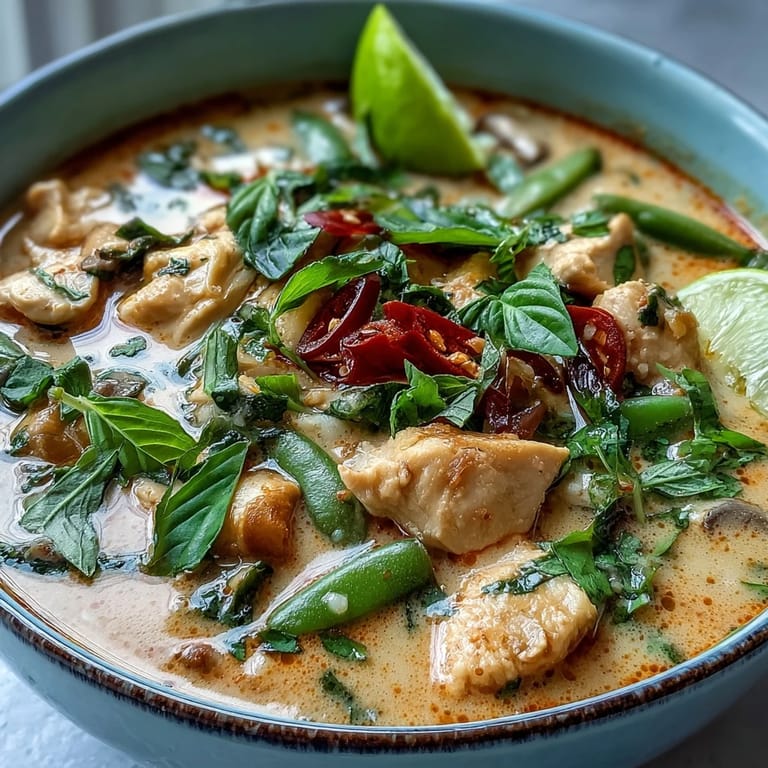
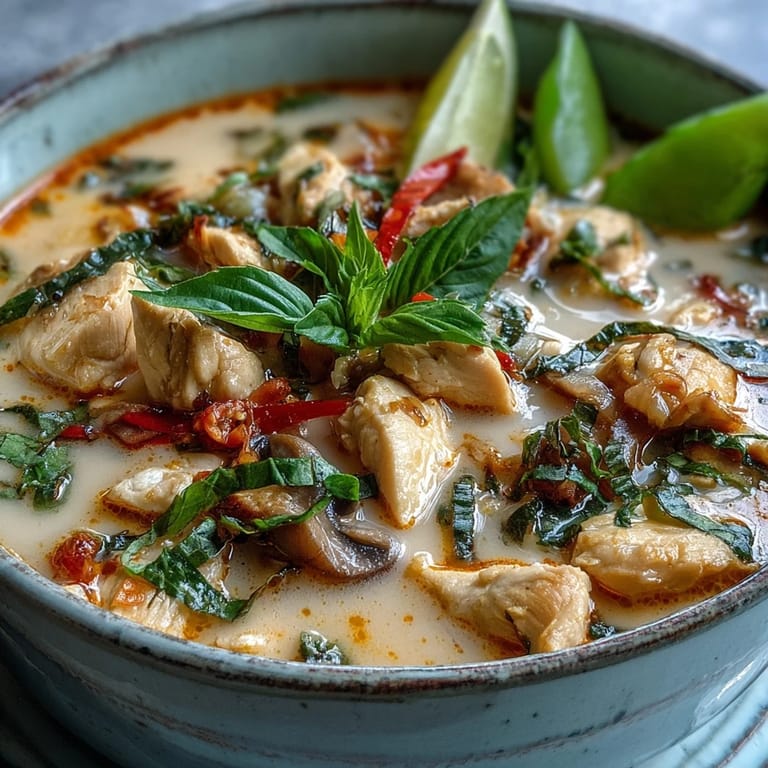
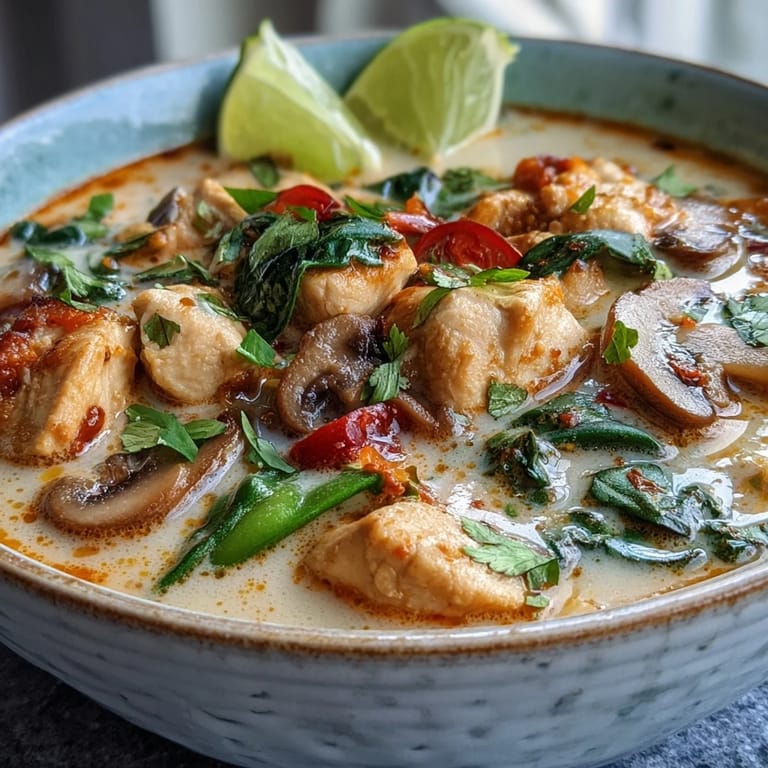
- Ladle soup into bowls and pile on cilantro, Thai basil, red chili if using, and a lime wedge on the side. Serve immediately while everything is hot and the herbs are at their brightest.
 Save
Save  Save
Save One winter, I made this soup for a potluck where someone had just announced they were going dairy-free. I watched their face when they tasted it and realized they'd been missing richness, not just milk. That moment crystallized why I love this soup: it proves that limitation breeds creativity, and that some of the best flavors come from cuisines that never relied on dairy in the first place.
Why This Soup Never Gets Boring
Every time I make this, I play with the vegetables slightly differently based on what's in my produce drawer. Sometimes I add baby corn or bamboo shoots for crunch, sometimes bok choy for a different green. The backbone of coconut, curry, and fish sauce stays constant, but the soup feels new each time. That flexibility is exactly why it's become my go-to soup for weeknight cooking—it's reliable but never feels repetitive.
The Secret of Layered Flavor
The order of ingredients matters more than you might think. Blooming the curry paste in hot oil for those crucial 60 seconds releases spice compounds that would stay dormant if you just stirred paste into broth. Similarly, toasting the ginger and garlic first means they taste bright instead of raw. It's not complicated technique—it's just respecting that each ingredient wants a moment of attention before the liquid arrives.
Substitutions and Swaps That Actually Work
I've made this with shrimp on nights when chicken felt heavy, and the soup actually comes together faster because shrimp cooks in minutes instead of the gentle 12-minute simmer chicken needs. Tofu works too—press it well, cut it into cubes, and add it near the end so it doesn't fall apart. The fish sauce can stay (it's not fishy-tasting, just deeply savory) or you can swap it for extra soy sauce and a splash of lime if that feels safer, though you'll lose some complexity.
- Try adding cooked rice noodles directly to the pot for a heartier meal, or let people add them to their own bowls.
- Extra heat comes from fresh red chilis stirred in or from red curry paste if you use 3 tablespoons instead of 2—start conservative and build up.
- This soup keeps beautifully in the fridge for three days and tastes even better as flavors meld, though add fresh herbs right before serving.
 Save
Save 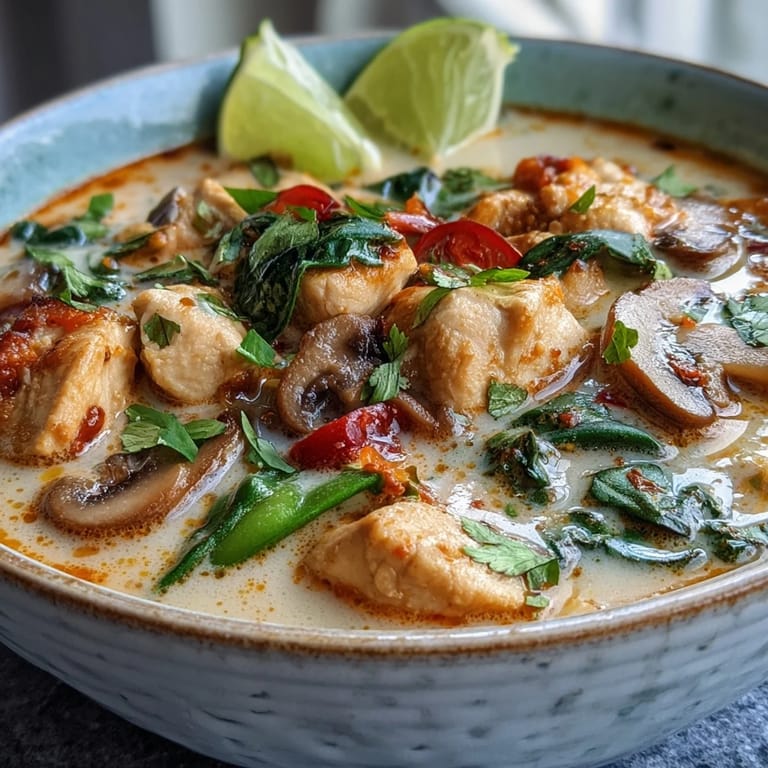 Save
Save This soup is the kind of meal that nourishes without pretense—it tastes like care without demanding expertise. Make it tonight, and I promise someone will ask you for the recipe.
Q&A About the Recipe
- → Can I use chicken breast instead of thighs?
Yes, chicken breasts work well in this soup. Cut them into bite-sized pieces for even cooking. Thighs offer more flavor and stay tender, but breasts are a leaner option that cooks through in the same timeframe.
- → How can I make this soup vegetarian?
Replace chicken with firm tofu or extra vegetables like baby corn and bamboo shoots. Use vegetable broth instead of chicken broth, and substitute fish sauce with soy sauce or a vegetarian fish sauce alternative for umami depth.
- → What can I serve with this soup?
Serve with jasmine rice, rice noodles, or crusty bread for a complete meal. You can also add cooked rice noodles directly to the soup for a heartier, one-bowl dish that's even more filling.
- → How spicy is this soup and can I adjust the heat?
The spice level depends on your red curry paste brand. Start with the recommended amount and taste before adding more. For less heat, use less curry paste or add extra coconut milk. For more heat, add fresh chilies or extra paste.
- → Can I prepare this soup ahead of time?
Yes, this soup stores well for up to 3 days in the refrigerator. The flavors actually deepen over time. Reheat gently on the stovetop, adding a splash of broth if needed. Add fresh garnishes when serving for the best presentation.
- → What type of coconut milk should I use?
Full-fat coconut milk creates the richest, creamiest texture and authentic flavor. Light coconut milk can be used for a lower-calorie version, but the soup will be less creamy. Shake the can well before opening to mix the cream and liquid.