 Save
Save My friend Marco showed up at my door on a grey Bangkok afternoon with a thermos of tom yum, steam rising from the lid like something alive. One sip and I understood why he'd dragged it across the city—the heat hit first, then the brightness of lime, then this mysterious floral note that made me lean back in my chair wondering what on earth I was tasting. I spent the next hour interrogating him about every ingredient, scribbling notes like a detective, and by evening I was in my kitchen crushing lemongrass and making a mess of my cutting board trying to recreate it.
The first time I made this for guests, I was so nervous about the balance of flavors that I kept tasting it every thirty seconds. My partner finally laughed and said, "Stop tasting, start trusting," and she was right—once the fish sauce and lime juice hit the pot together, everything clicked. Now when people ask for seconds, I just smile because I know exactly what hooked them: that moment when sour and salty and spicy collide in one bowl.
Ingredients
- Boneless, skinless chicken thighs or breasts: Thighs stay juicier and more forgiving, but breasts work fine if you slice them thin and don't overcook them.
- Chicken stock: Use good quality stock—it's the foundation of everything, and watery stock makes watery soup.
- Lemongrass: Fresh is worth hunting down; the dried stuff tastes like hay by comparison, though it works in a pinch.
- Galangal: This ginger cousin brings a sharper, almost medicinal bite that lemongrass alone can't deliver.
- Makrut lime leaves: They look fragile but pack serious citrus flavor and aroma that bottled lime juice wishes it could match.
- Birds eye chilies: These small ones are deceptively fierce, so crush them gently to release heat without making the broth unbearably hot.
- Mushrooms: Oyster mushrooms soak up the broth beautifully, but button mushrooms are fine if that's what you have.
- Tomatoes and onion: These soften into the broth and add subtle sweetness to balance the sharp edges.
- Fish sauce: Yes, it smells like the ocean had a bad day, but trust it—it's the secret ingredient that makes everything taste authentic.
- Fresh lime juice: Bottled won't give you that bright snap you need, so squeeze it fresh right before serving.
Tired of Takeout? 🥡
Get 10 meals you can make faster than delivery arrives. Seriously.
One email. No spam. Unsubscribe anytime.
Instructions
- Release the aromatics:
- Take the lemongrass, galangal, and makrut lime leaves and whack them with the back of your knife—you'll hear them crack and suddenly your kitchen smells like a Thai market. Don't be shy; you want to break down the cell walls so all those oils and flavors can escape into your soup.
- Build the infused broth:
- Bring your stock to a rolling boil and add all the bruised aromatics, the crushed chilies, and the smashed garlic. Let it bubble away uncovered for five minutes while you stand there and breathe in—this is when the magic starts happening. The broth will shift from plain and pale to golden and alive.
- Cook the chicken and onion:
- Slide in your sliced chicken and onion, making sure everything is submerged. Simmer for eight to ten minutes, and you'll see foam rise to the surface—skim it off with a spoon because it makes the broth cloudy. The chicken will cook through and turn opaque, which is your cue to move forward.
- Add the vegetables:
- Now the mushrooms and tomato wedges go in, and everything becomes bright again as the tomato releases its juice. Give it another five to seven minutes until the mushrooms are soft and the tomatoes are starting to fall apart. This is when you taste for the first time and think, "Wait, is this actually working?"
- Season to balance:
- Fish sauce, lime juice, sugar, and salt all go in together, and suddenly the soup transforms—the flavors stop being separate and start singing. Taste it, adjust it, taste it again; this is your moment to dial in whether you want more sour, more salty, or more heat. There's no such thing as perfect here, only what tastes right to you.
- Finish and serve:
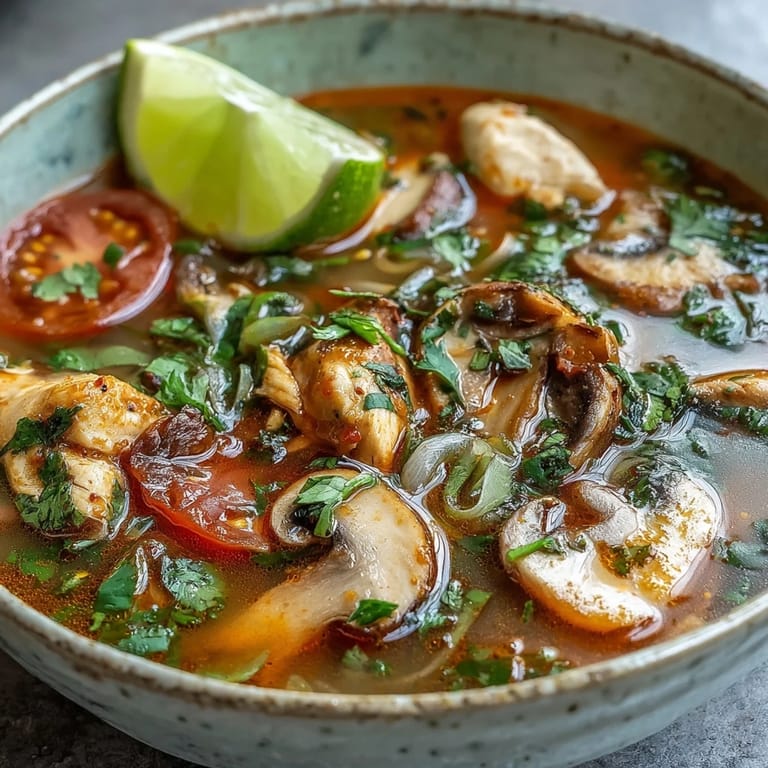
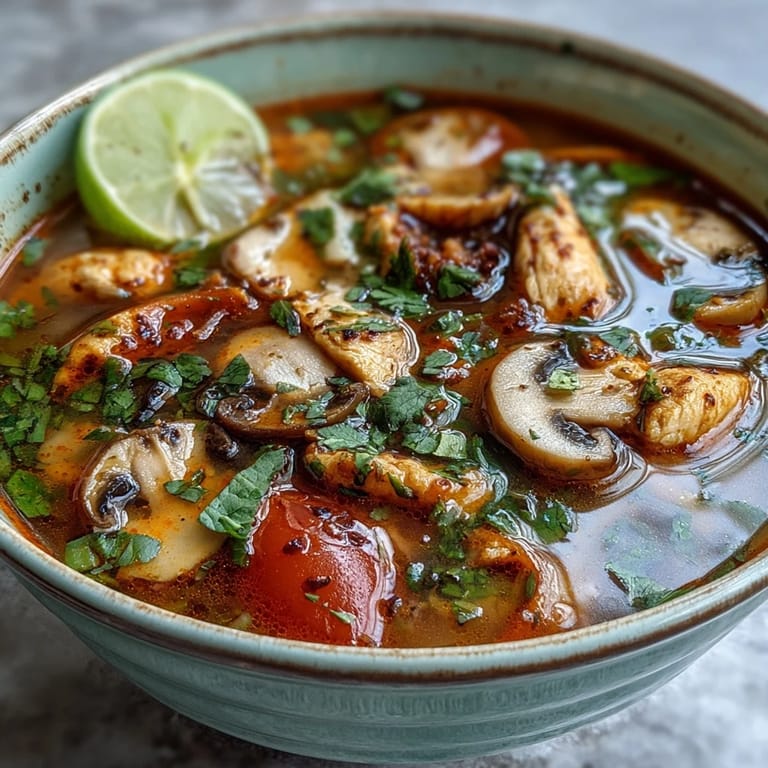
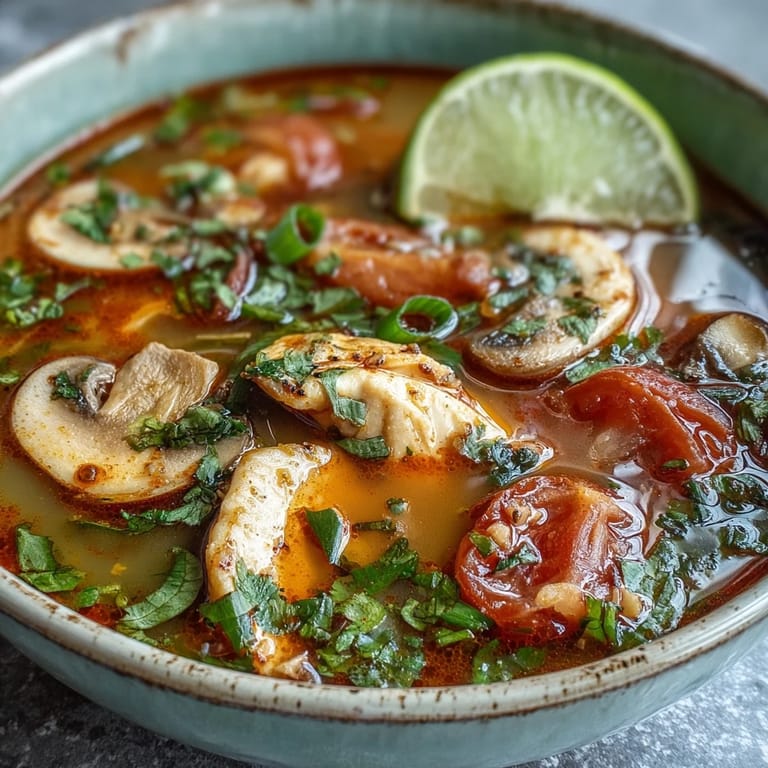
- Remove the pot from heat and fish out the lemongrass stalks and galangal slices if they bother you (though some people leave them for extra flavor). Ladle the soup into bowls, scatter cilantro and spring onions on top, and set a lime wedge on the rim for people to squeeze in as they eat.
 Save
Save 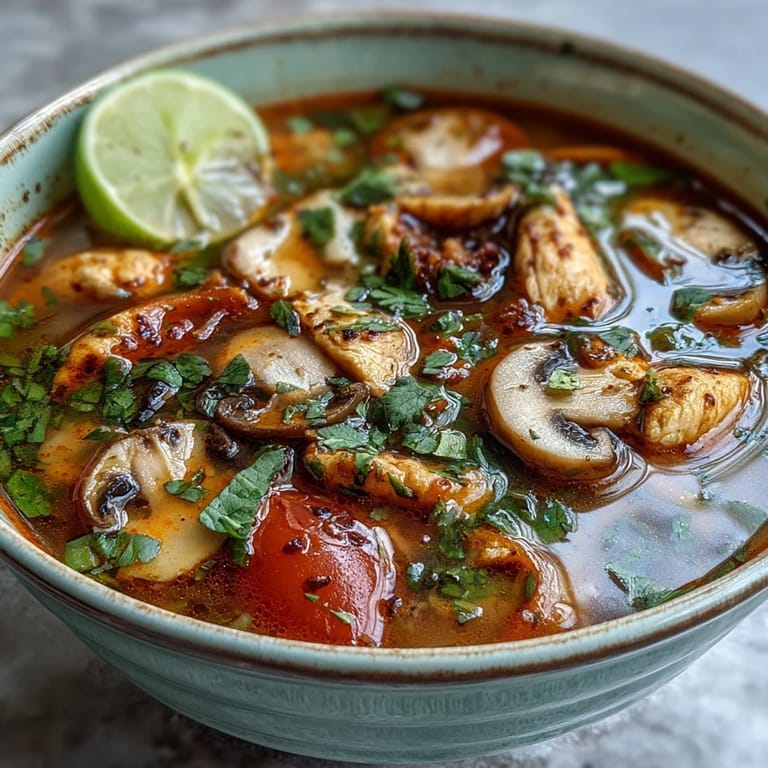 Save
Save There's this moment near the end when the kitchen fills with steam and citrus and heat, and suddenly you're not just cooking anymore—you're in Bangkok, or Thailand, or somewhere that exists only in that one perfect spoonful. That's the moment I understood why Marco had risked spilling hot soup in his car to share it with me.
The Secret to Authentic Tom Yum
Authenticity isn't about buying fancy ingredients from a specialty store or following the recipe like a sacred text. It's about understanding that tom yum is supposed to be vibrant and alive and responsive to your taste buds—it's a conversation between you and the broth, not a monologue. Every time you make it, you'll adjust the lime juice or the fish sauce slightly because your mood is different or the limes were more tart that day or you're cooking for someone who likes heat more than you do.
Variations That Actually Work
The beauty of tom yum is that it's forgiving enough to bend without breaking. You can swap the chicken for shrimp and suddenly it's tom yum goong—the shrimp cook in two minutes, so you add them later. You can throw in a splash of coconut milk or evaporated milk right before serving if you want something creamier and softer. Some people add a handful of straw mushrooms or even tofu, and there's nothing wrong with that.
Serving and Storing Wisdom
Tom yum is best eaten fresh and hot, right when the aromatics are still fragrant and the lime juice hasn't had time to fade. If you have leftovers, they keep in the fridge for two or three days, though the broth will get more pronounced and you might need to adjust the seasoning. Reheat gently without boiling, and squeeze fresh lime juice right before serving to bring back that brightness.
- Serve alongside steamed jasmine rice so people can drizzle soup over it and make little flavor combinations with every spoonful.
- If you're cooking for someone who's heat-sensitive, go easy on the chilies and let people add their own heat at the table with chili oil or fresh sliced chilies.
- Make this soup once and you'll understand why it's beloved—make it twice and you'll have invented your own version of it.
 Save
Save  Save
Save This soup turned into my answer to almost every question: when someone's sick, when it's cold outside, when I want to feel like I know how to cook. It's uncomplicated enough to make any night, but special enough to serve to people you actually want to impress.
Q&A About the Recipe
- → Can I use chicken breast instead of thighs?
Yes, chicken breast works perfectly. Slice thinly and be careful not to overcook to maintain tenderness. Thighs offer slightly more flavor and stay juicier.
- → What can I substitute for galangal?
Fresh ginger can substitute in a pinch, though the flavor will be slightly different. Galangal has a more citrusy, pine-like taste compared to ginger's warmth.
- → How spicy is Tom Yum Chicken?
The heat level is adjustable based on the number of birds eye chilies used. Start with 2-3 chilies for mild heat, or use up to 6 for an authentic spicy kick.
- → Can I make this soup ahead of time?
Yes, prepare the broth and chicken ahead, but add fresh lime juice and herbs just before serving to maintain bright, vibrant flavors.
- → What's the difference between Tom Yum and Tom Kha?
Tom Yum is clear and intensely sour-spicy, while Tom Kha includes coconut milk for a creamy, milder version. Both use similar aromatic herbs.
- → Where can I find makrut lime leaves?
Asian grocery stores typically stock fresh or frozen makrut lime leaves. Dried leaves work as an alternative, though fresh provides superior aroma.