 Save
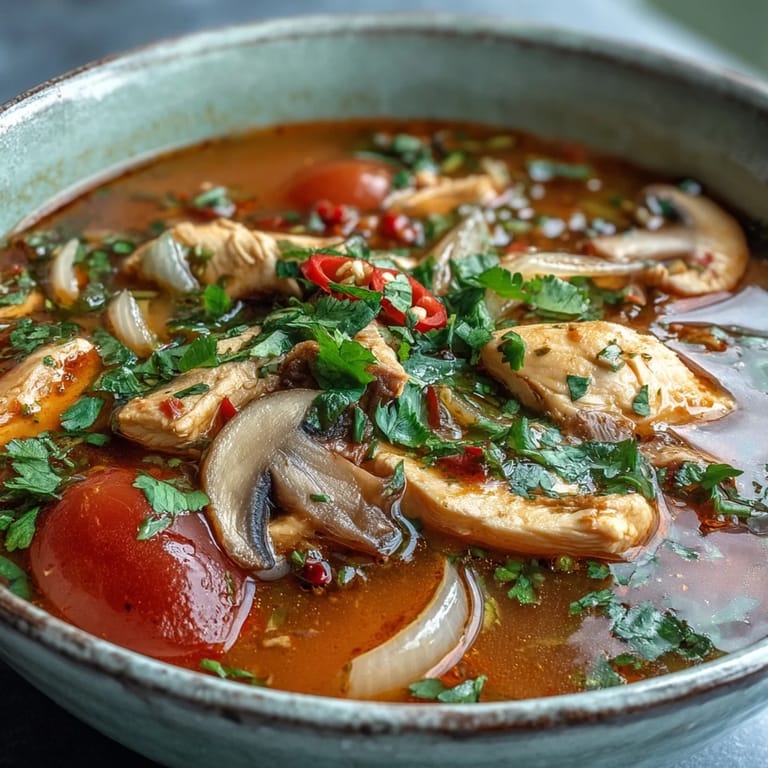
Save My first proper bowl of Tom Yum Gai arrived on a sweltering Bangkok afternoon, served in a cramped street stall where the owner's grandmother stirred the pot with the kind of practiced ease that only comes from decades of muscle memory. The broth hit me all at once—hot, sour, fragrant, alive—and I realized in that moment that this soup wasn't just food; it was theater. Years later, I still chase that feeling when I make it at home, though now I understand that the magic lives in respecting each ingredient's role and knowing when to stop fussing.
I made this for a dinner party once when a friend mentioned offhandedly that she'd never had authentic Thai soup, and watching her face as that first spoonful hit her tongue—the surprise, then the smile—reminded me why I love cooking for people. The soup transformed my ordinary weeknight kitchen into something warm and welcoming, and somehow the modest ingredients became extraordinary simply because they were shared with genuine delight.
Ingredients
- Boneless, skinless chicken breast or thighs, thinly sliced (350 g): Thighs hold up better to the boiling and stay tender, though breast works if you slice it thin and watch carefully to avoid overcooking.
- Chicken stock (1.2 L): Use homemade or quality store-bought; the broth is your foundation, so it deserves to be flavorful from the start.
- Lemongrass stalks, smashed (2): The tough outer leaves go, but the smashing releases those impossibly fragrant oils that define Tom Yum.
- Kaffir lime leaves, torn (5): These are non-negotiable if you can find them; the citrus notes they bring are subtle but irreplaceable.
- Galangal slices (3): It's earthier than ginger and slightly more bitter, but ginger works if galangal eludes you—just use a bit less.
- Thai bird's eye chiles, smashed (2): Fresh, spicy, and meant to infuse rather than be eaten; smashing them releases their heat into the broth before you taste the bite.
- Oyster or button mushrooms, sliced (150 g): They soften just enough without falling apart, absorbing all those bold flavors while keeping their shape.
- Medium tomatoes, cut into wedges (2): They add brightness and a subtle sweetness that balances the heat beautifully.
- Small onion, sliced (1): It mellows as it cooks, adding a gentle sweetness that rounds out the sharpness.
- Nam prik pao, Thai roasted chili paste (2 tbsp): This is where depth lives; it's smoky, spicy, and complex—worth seeking out at an Asian market.
- Fish sauce (2 tbsp): Yes, it smells intense, but trust it; this is umami in its truest form, and it transforms everything.
- Sugar (1 tbsp): A small amount tames the fire and allows all the flavors to sing without anyone ingredient dominating.
- Salt (1/2 tsp): Taste as you go because everyone's preference differs, and the broth will concentrate slightly as it simmers.
- Freshly squeezed lime juice (2 tbsp, plus extra): Fresh lime is essential here; bottled simply won't give you that bright, living quality that makes Tom Yum unmistakable.
- Fresh cilantro, chopped (2 tbsp): Add it just before serving so it stays vibrant and isn't lost in the heat.
- Extra Thai chiles, sliced (1–2): For those who want to turn up the dial without apology.
Tired of Takeout? 🥡
Get 10 meals you can make faster than delivery arrives. Seriously.
One email. No spam. Unsubscribe anytime.
Instructions
- Bring the broth to life with aromatics:
- Pour your stock into a large saucepan and bring it to a gentle boil, then add the smashed lemongrass, torn kaffir lime leaves, galangal slices, and smashed chiles. Let it simmer for 5 minutes while the kitchen fills with a fragrance that makes you grateful to be alive.
- Add the chicken and let it cook gently:
- Slip in your thinly sliced chicken and simmer for 3–4 minutes, skimming away any foam that rises to the surface. You're not aiming for a long braise here; the chicken should be just cooked through, still tender.
- Layer in the vegetables:
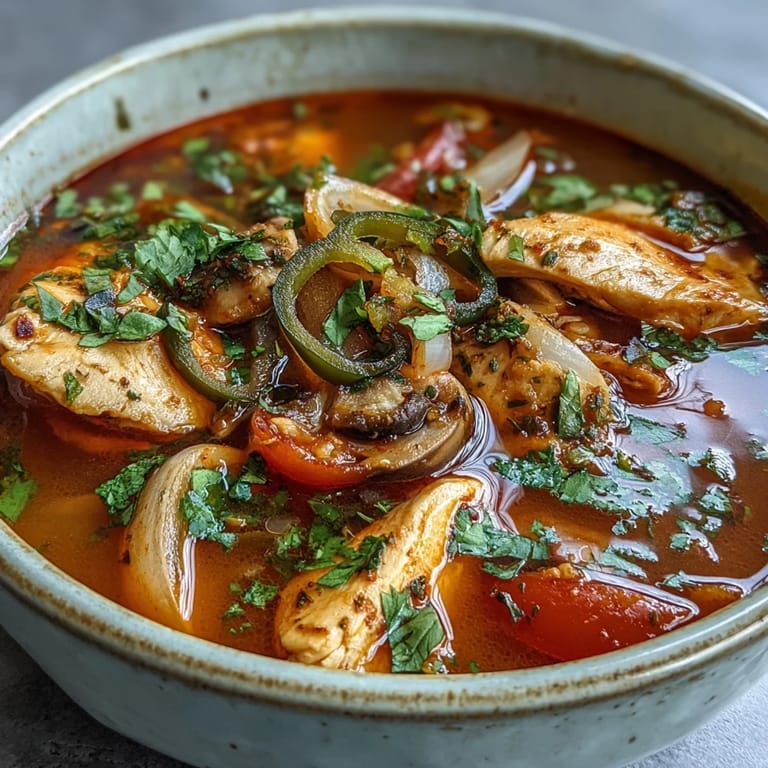
- Add the mushrooms, tomato wedges, and sliced onion, simmering for another 3–4 minutes until they're tender but still hold their shape. This is when the soup begins to look like itself, color blooming as the tomatoes start to break down.
- Season with depth and balance:
- Stir in the nam prik pao, fish sauce, sugar, and salt, then simmer for 2 minutes so everything melds together. This is your moment to taste and adjust—more heat? More sourness? More salt? Trust your palate.
- Finish with brightness:
- Remove from heat and stir in the fresh lime juice, then taste one final time. This is the moment that everything comes into focus, the sourness waking up every other flavor.
- Serve with care:
- Ladle into warm bowls, garnish with fresh cilantro and sliced chiles if you're feeling bold, and set out lime wedges on the side so each person can adjust their bowl to their liking.
 Save
Save 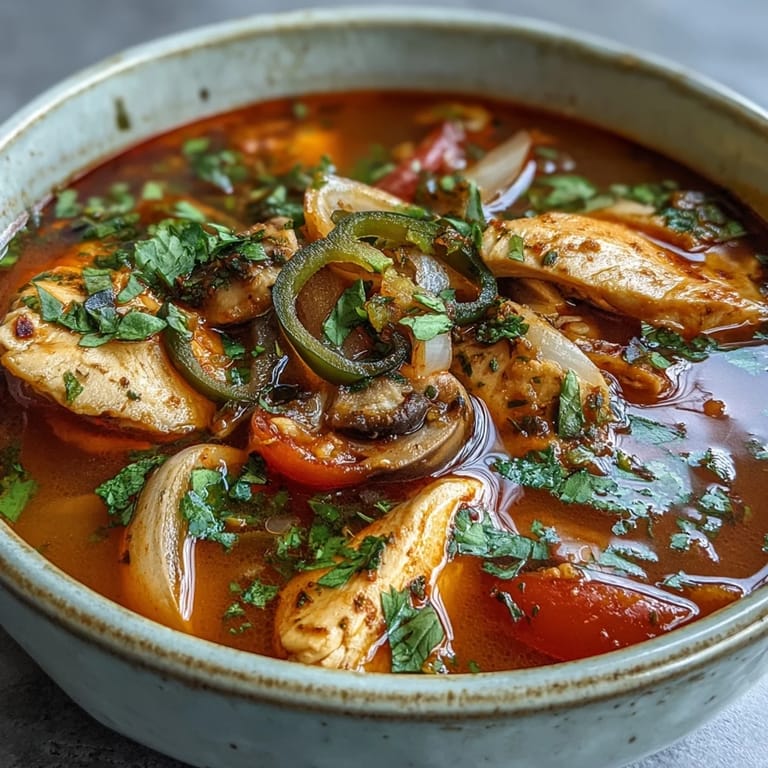 Save
Save There's a moment in every bowl of Tom Yum Gai where all the elements reach harmony—the aromatic broth, the tender chicken, the vegetables yielding to the heat, the chiles whispering their warning—and you understand why this soup has endured for centuries. It's not complicated, but it demands respect and attention, and when you give it both, it rewards you with something genuinely transcendent.
The Aromatics Are Non-Negotiable
The lemongrass, lime leaves, and galangal aren't just garnish or afterthoughts; they're the soul of this soup, and skipping any of them creates a completely different dish. If you can't find kaffir lime leaves, fresh lime zest stirred in at the end helps, but it's truly not the same. I learned this the hard way when I tried to rush through a version with minimal ingredients, only to realize I'd made a completely forgettable broth.
Heat Is Personal
The amount of chile you use is entirely about your comfort level, and that's beautiful because it means everyone can make this soup their own way. I have friends who add double the chiles and friends who remove them entirely, and both versions are legitimate Tom Yum. Start conservative and taste as you go; you can always add more heat, but you can't take it back.
Variations and Flexibility
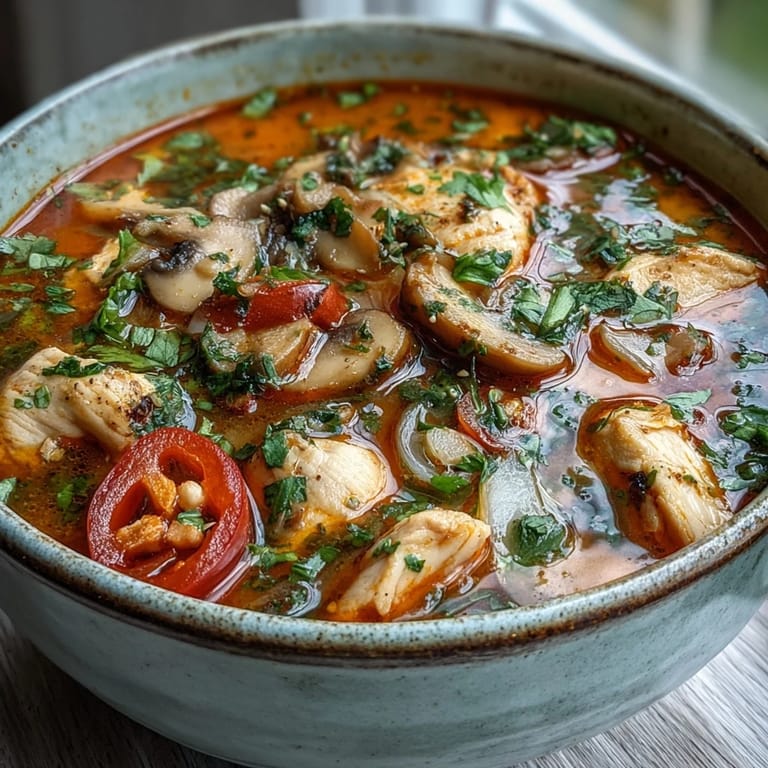
Tom Yum is endlessly adaptable, which is partly why it's become such a beloved staple across Thailand and beyond. Shrimp transforms it into Tom Yum Goong with barely any adjustment, and a splash of coconut milk creates a creamier version called Tom Yum Cream that's equally delicious. Some cooks add mushroom varieties or vegetables based on what's in season or what they have on hand, and the soup remains true to itself because the aromatic broth and the balance of flavors stay constant.
- Substitute shrimp for chicken if you want a lighter, brighter version that cooks even faster.
- Add a splash of coconut milk at the very end if you want creaminess without losing the essential sour and spicy character.
- Keep extra lime wedges and fresh chiles on the table so each person can customize their bowl to their exact preference.
 Save
Save 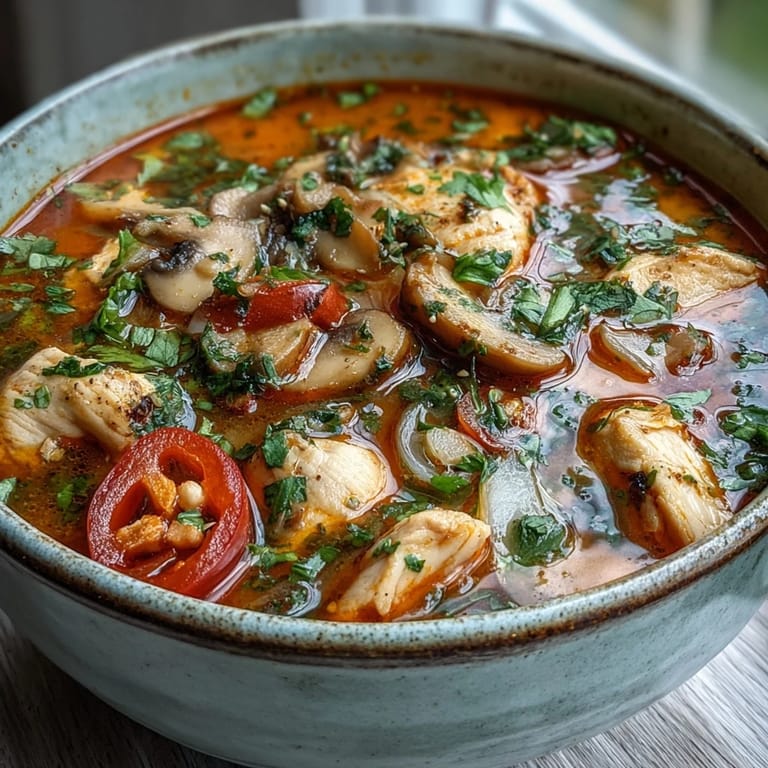 Save
Save Tom Yum Gai is proof that simple ingredients handled with care and intention create something profound. Make it often, taste it slowly, and you'll find yourself coming back to it again and again, each time discovering something new.
Q&A About the Recipe
- → Can I substitute ingredients if I can't find galangal or kaffir lime leaves?
Yes, fresh ginger works well as a substitute for galangal, though it has a slightly different flavor profile. For kaffir lime leaves, you can use a combination of lime zest and a bay leaf, though the authentic aroma will differ.
- → How can I adjust the spiciness level?
Control the heat by adjusting the number of Thai bird's eye chiles. Start with one chile for mild heat, or omit them entirely and add sliced chiles as garnish so diners can customize their spice level.
- → What's the difference between Tom Yum Gai and Tom Yum Goong?
Tom Yum Gai uses chicken as the main protein, while Tom Yum Goong features shrimp. The preparation method and aromatic broth remain the same; simply swap the chicken for peeled, deveined shrimp.
- → Can I make this soup ahead of time?
The broth can be prepared in advance, but add the chicken, vegetables, and lime juice just before serving. The lime juice loses its brightness when stored, and the chicken can become tough if reheated multiple times.
- → What type of mushrooms work best?
Oyster mushrooms are traditional and provide the best texture, but button, cremini, or straw mushrooms all work well. Slice them evenly so they cook uniformly in the hot broth.
- → Is nam prik pao essential for authentic flavor?
Nam prik pao (Thai roasted chili paste) is crucial for authentic Tom Yum flavor, providing depth, mild sweetness, and the characteristic reddish color. It's available at Asian markets or online and has a long shelf life when refrigerated.