 Save
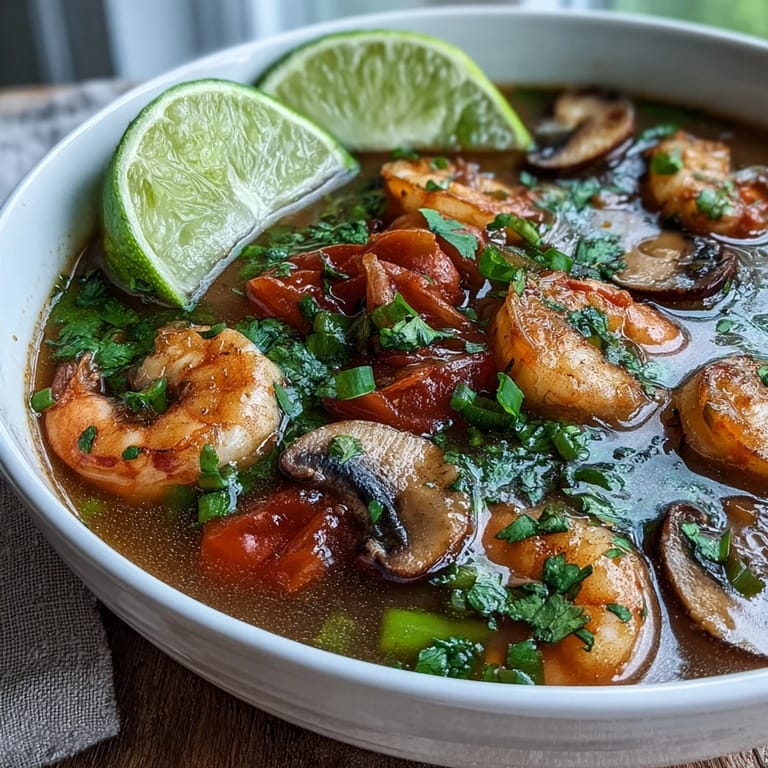
Save My first proper bowl of tom yum arrived at a cluttered Bangkok street stall on an unexpectedly humid afternoon, and the heat hit my face before the spoon even touched my lips. A local friend watching me wince with delight laughed and said this soup was about balance—fire and acid, fragrant and bold, all dancing together. Years later, when I finally learned to make it myself, I understood what she meant the moment that lemongrass hit the hot broth, filling my kitchen with a smell so intoxicating I had to pause and just breathe it in.
I made this for my sister during a particularly stressful week, and she sat at my kitchen counter with a bowl in her hands, steam rising into her face, and just closed her eyes. She didn't say anything for a minute—just kept sipping and sighing—and that's when I realized soup like this is more than just sustenance. It's the thing you make when someone needs to feel cared for without any fuss.
Ingredients
- Chicken or vegetable stock (4 cups): This is your foundation, so don't skimp on quality—homemade is incredible here, but a good store-bought broth will shine once the aromatics infuse it.
- Lemongrass stalks (2, trimmed and smashed): Smashing them releases the oils that make this soup sing, and the scent alone tells you you're doing something right.
- Kaffir lime leaves (4, torn): These deliver a citrusy complexity that bottled lime juice simply cannot match, so hunt them down in the Asian section or online.
- Galangal (3 slices, or ginger if unavailable): It's peppery and slightly medicinal, different from ginger but equally important—ginger works in a pinch though.
- Thai bird's eye chiles (2, sliced): These are small but fierce, so start with one if you're heat-sensitive and add more as you taste.
- Mushrooms (200 g, sliced): They absorb the broth beautifully and add an earthy depth that makes the soup feel substantial without heaviness.
- Tomatoes (2 medium, cut into wedges): Ripe ones matter here—they break down slightly and add natural sweetness to balance the spice and acid.
- Onion (1 small, sliced): It softens into the broth, adding a subtle sweetness that anchors all those bright, bold flavors.
- Garlic (3 cloves, smashed): Smashing rather than mincing keeps the pieces visible and lets the broth absorb the pungent oils more evenly.
- Shrimp (300 g, peeled and deveined): Quality matters—fresh or properly thawed shrimp will cook in minutes and stay tender, while frozen or old shrimp can turn rubbery.
- Fish sauce (3 tbsp): This is the umami backbone that ties everything together, and yes, it smells intense, but trust the process.
- Fresh lime juice (2 tbsp): Squeeze it fresh just before serving—bottled lime juice loses its brightness and the soup will taste flat by comparison.
- Sugar (1 tsp): Just a pinch to round out the flavors and prevent the soup from tasting aggressively sour.
- Chili paste (1 tsp, optional): Nam prik pao adds a roasted depth and slight sweetness that makes the heat feel more complex.
- Fresh cilantro and green onions: These finish the soup and give you a chance to adjust the herbal brightness to your taste right at the table.
Tired of Takeout? 🥡
Get 10 meals you can make faster than delivery arrives. Seriously.
One email. No spam. Unsubscribe anytime.
Instructions
- Build the aromatic base:
- Bring your stock to a gentle boil in a medium pot, then add the lemongrass, kaffir lime leaves, galangal, chiles, smashed garlic, and sliced onion all at once. The kitchen will suddenly smell like a Thai market, and you'll know you're on the right track—let this simmer for 10 minutes so every flavor melds into the broth.
- Add the vegetables:
- Slide in the mushrooms and tomato wedges and let them cook for about 5 minutes until the mushrooms have softened and the tomatoes are starting to break down. Don't walk away—this is when the soup transforms from aromatic broth to something with real body.
- Cook the protein:
- Add your shrimp (or tofu for vegetarian) and maintain a gentle simmer—watch carefully because shrimp only needs 2 to 3 minutes to turn opaque and cooked through. Overcook them by even a minute and they'll be tough, so this is where paying attention really matters.
- Season to perfection:
- Stir in the fish sauce, fresh lime juice, sugar, and chili paste if you're using it, then taste carefully. This is your moment to adjust—if it feels too salty, add a squeeze more lime; if it's too sour, a tiny pinch more sugar helps; if you want more heat, thin-slice another chile and add it to your bowl.
- Finish and serve:
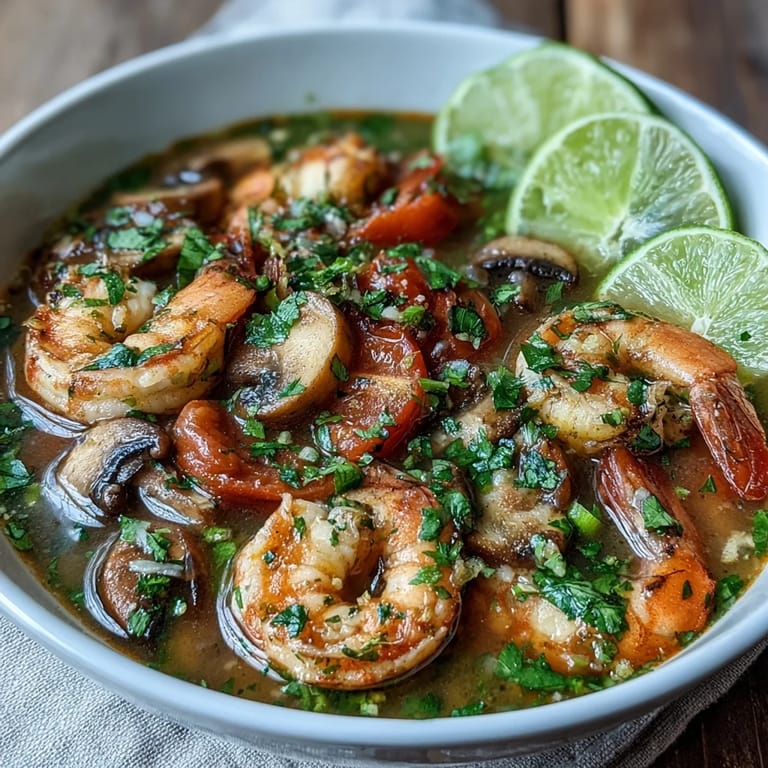
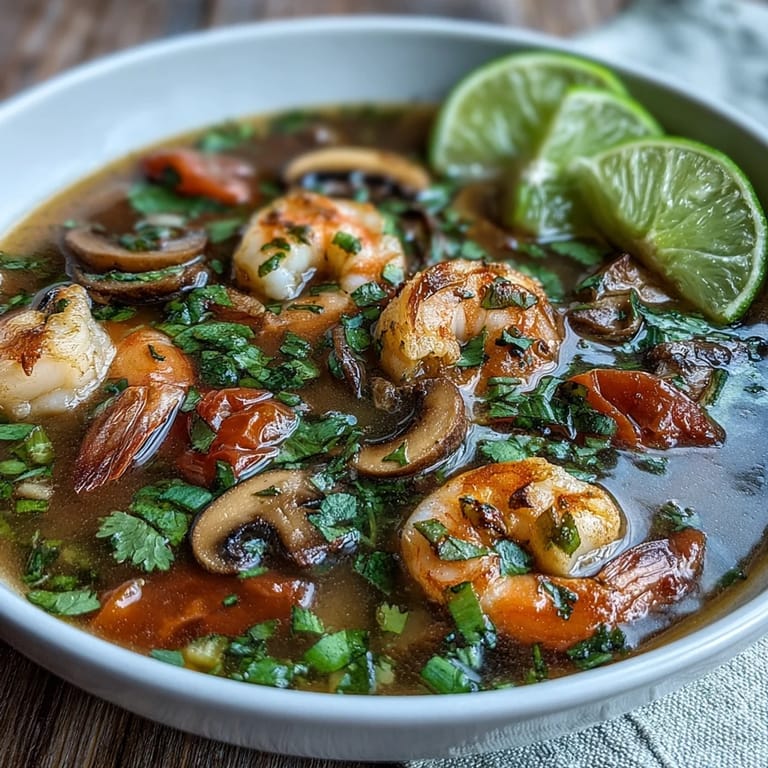
- Ladle the hot soup into bowls, pile cilantro and green onions on top, and set lime wedges alongside so everyone can adjust their own brightness and heat. The garnishes aren't just decoration—they're how you let each person make the soup their own.
 Save
Save 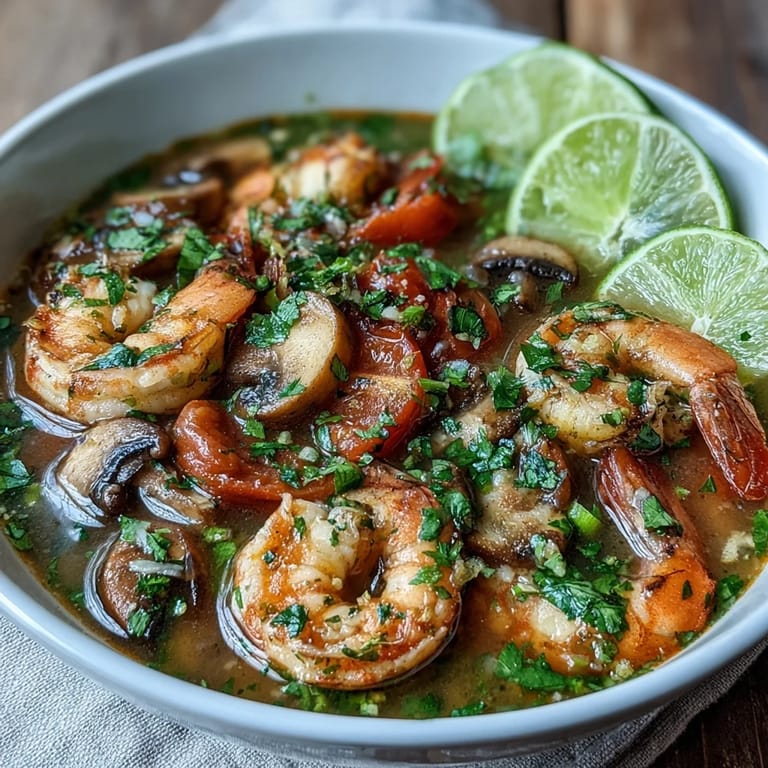 Save
Save One evening, I made a pot of this for friends who didn't think they liked spicy food, and they each took one cautious sip, paused, and then couldn't stop eating. What struck me was that they weren't suffering through the heat—they were tasting the layers underneath it, the way sour and savory and herbal all supported the spice instead of competing with it. That's when tom yum stopped being just another soup in my rotation and became something I make when I want people to taste what thoughtful cooking actually does.
The Flavor Formula That Works Every Time
Thai cooking teaches you that there's a reason this soup tastes the way it does, and it's not accident—it's architecture. The lemongrass and galangal create the foundation, the chiles add the edge, the lime brings brightness, fish sauce roots everything in umami, and just a whisper of sugar keeps it from feeling one-dimensional. Once you understand that balance, you can taste what's missing instantly, and seasoning stops being guesswork.
Timing and Temperature Matter More Than Ingredients
I learned this when I got impatient one night and rushed through the infusion step, thinking the flavors would develop anyway. They didn't—the broth tasted thin and confused because the aromatics hadn't released their oils properly. The next time, I let it simmer the full 10 minutes and the difference was undeniable. Temperature also matters because everything is meant to taste fresh and alive, not stewed—that's why you add the protein last and the lime juice just before serving.
Customization Without Losing the Soul
This soup is flexible enough to accommodate almost any preference without becoming unrecognizable, which is part of why it works so well for feeding people with different tastes. You can swap the protein, adjust the heat level, add extra vegetables, or make it vegetarian by using soy sauce instead of fish sauce and the soup still tastes unmistakably like itself. The key is respecting the basic framework while letting people make it their own.
- Straw mushrooms or baby corn add textural variety if you want something beyond the standard version.
- A splash of coconut milk stirred in at the very end softens the edges without changing the character completely.
- Leftover soup keeps for two days in the fridge, but the lime juice fades, so taste and adjust before reheating.
 Save
Save  Save
Save Make this soup when you want to feel like you've traveled without leaving your kitchen, or when someone needs proof that good food doesn't require hours of labor. It's the kind of dish that reminds you why cooking matters.
Q&A About the Recipe
- → Can I make Tom Yum Soup vegetarian?
Yes, substitute vegetable stock for chicken stock, use tofu instead of shrimp, and replace fish sauce with soy sauce for a delicious vegetarian version.
- → What can I use if I can't find galangal?
Fresh ginger makes an excellent substitute for galangal. While the flavor profile differs slightly, it still provides the aromatic warmth essential to the broth.
- → How spicy is Tom Yum Soup?
The heat level is adjustable. Start with one Thai chile and add more to taste. You can also remove seeds to reduce spiciness while maintaining flavor.
- → Can I prepare the broth in advance?
Absolutely. Simmer the stock with aromatics up to 2 days ahead, strain, and refrigerate. When ready to serve, reheat and add vegetables and protein fresh.
- → What other proteins work well in Tom Yum?
Chicken, white fish, squid, or mussels are excellent alternatives to shrimp. Adjust cooking times based on protein choice to avoid overcooking.
- → Should I remove the lemongrass and lime leaves before serving?
These aromatics are traditionally left in for presentation and continued flavor infusion, but inform guests they're not meant to be eaten.